
Coming Home guide

Carer's assessment: help for you, as a carer
Your right to a carer's assessment: how to ask, getting ready, a letter to copy, the eligibility rules, support plans and what to do if you disagree.
Version 1. October 2026. Next review: April 2027.
See what else you might be able to get with the Benefits finder.
Coming Home is coming soon to iPhone. Join the waitlist.
Version 1. October 2026. Next review: April 2027. Information read on 4 October 2026. We review this guide every April, and straight away if the law or the official guidance changes in any nation.
Who this guide is for: you, if you look after someone and caring is affecting your own life. It might be your mum or dad, your partner, your child, a brother or sister, or a friend. You don't have to live with them, and you don't have to call yourself a carer. This guide explains the carer's assessment: your right to one, how to ask, how to get ready, and what can happen next. It covers England in full, with Wales and Northern Ireland in section 12. Scotland has its own process, explained briefly in section 12.
How to use it: read only the part you need. Sections 1 to 3 explain what a carer's assessment is, who can have one and how to ask. Sections 4 to 7 help you get ready, with a list and a letter you can copy. Sections 8 to 11 cover the decision, support, reviews and disagreeing. Every fact has a source and a date, and the full list is in "Sources" at the back.
Guidance, not advice. This guide explains how carer's assessments work, in plain words. It can't tell you what support you'll be offered. Only the council (the Health and Social Care Trust in Northern Ireland) can decide that. For advice about your own situation, talk to one of the free advice services in section 14.
If you're worried about their health, contact their GP or NHS 111. In an emergency call 999.
1. What a carer's assessment is
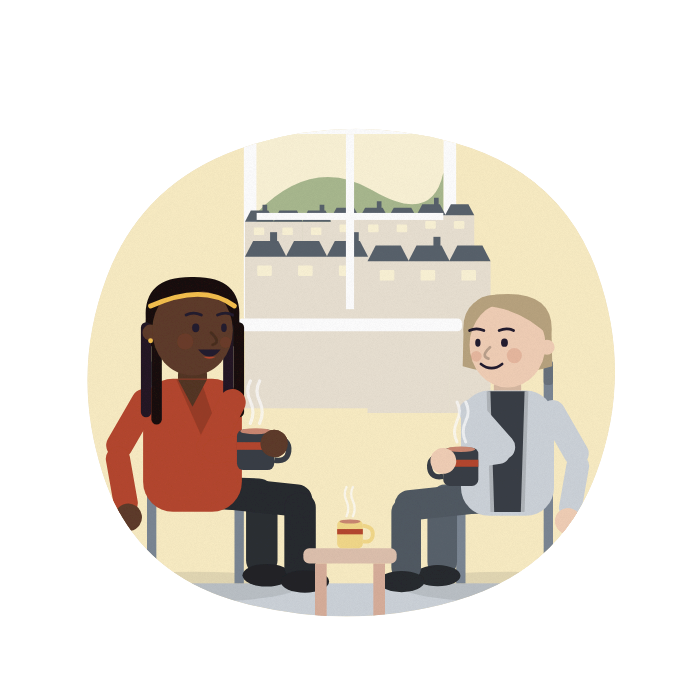
A carer's assessment is a conversation with the council about you: how caring affects your health, work, sleep, relationships and time for yourself, and what would make life easier (NHS, Carer's assessments, reviewed 1 Jul 2022).
It's free. It's separate from any assessment of the person you look after, although you can ask for both at the same time (NHS, Carer's assessments).
The NHS says it might lead to things like (NHS, Carer's assessments):
- someone taking over caring so you can have a break
- exercise classes or a gym membership to help with stress
- help with taxi fares if you don't drive
- help with housework or gardening
- training in how to help someone move safely
- being put in touch with local support groups
- advice about benefits for carers
2. Who can have one
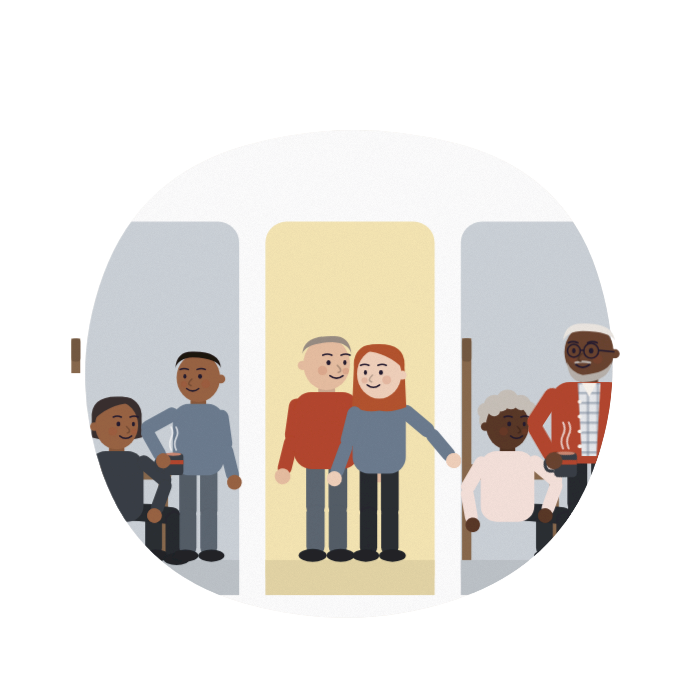
You count as a carer
The NHS says you're a carer if you regularly look after someone because they're ill, older or disabled, including family members. That can mean help with washing, dressing or medicines, getting to appointments, shopping, cleaning, paying bills, or keeping someone company and watching over them (NHS, Carer's assessments).
The law includes practical and emotional support (legislation.gov.uk, Care Act 2014, section 10). You can be a carer if you intend to start caring, for example when someone is about to come home from hospital (Care Act 2014, section 10(3)).
The council's duty in England
Under the Care Act 2014, the council must assess any adult carer who appears to need support, now or in the future. That applies whatever the council thinks about how much support you need, and whatever your money or the money of the person you look after (Care Act 2014, section 10(1) and (4)). The statutory guidance says the duty applies where a carer "may have any level of needs for support" (DHSC, Care and support statutory guidance, updated 22 Jul 2025, para 6.16).
People who care as their job, or as volunteers, aren't normally counted as carers. The council can still count them as one if the relationship means it would be right (Care Act 2014, section 10(9) and (10)).
Young carers and parent carers
- Young carers (under 18) have a right to a young carer's needs assessment from the council, if they appear to need support or they or a parent ask for one (legislation.gov.uk, Children Act 1989, section 17ZA). See our guide to looking after yourself, section 5.
- Parent carers of a disabled child have a right to a parent carer's needs assessment (legislation.gov.uk, Children Act 1989, section 17ZD). The NHS says to contact the council's children with disabilities team (NHS, Carer's assessments).
These rights were added by the Children and Families Act 2014.
3. How to ask
- Contact adult social services at the council where the person you look after lives. You can phone or ask online. Find your council on GOV.UK (NHS, Carer's assessments).
- Ask in writing if you can, so there's a record. Section 7 has a letter you can copy.
- Ask for a carer's assessment at the same time as their needs assessment, if they're having one. The council can combine the two if you both agree. If either of you doesn't want that, they must be done separately (statutory guidance, para 6.74). You can also ask for part of the conversation to happen without them there (statutory guidance, para 6.18).
- If they're in hospital, tell the ward you're the carer. The hospital discharge guidance says the council should carry out a carer's assessment before caring starts if it's a new caring role, or review an existing one if needs have gone up (DHSC and NHS England, Hospital discharge and community support guidance, updated 26 Jan 2024). See our guide to coming home from hospital, section 3.
- If you said no before, you can ask again at any time, and the council must carry out the assessment (statutory guidance, para 6.21).
The council should tell you from the start what to expect: the format, roughly how long it will take, and how to complain (statutory guidance, paras 6.22 and 6.29).
4. What the assessment covers
The law says a carer's assessment must look at (Care Act 2014, section 10(5) and (6)):
- whether you're able to care, and are likely to stay able
- whether you're willing to care, and are likely to stay willing
- how your needs affect your wellbeing
- the outcomes you want in your day-to-day life
- whether support could help you get there
- whether you work or want to, and whether you're in education, training or leisure, or want to be
The statutory guidance says the council must think about whether caring can carry on, now and in the future, and about the practical and emotional support you give (statutory guidance, para 6.18). It must also look at the outcomes you want in your own life, including work, learning and time for yourself (statutory guidance, para 6.19).
You don't have to keep caring. Being asked whether you're willing to carry on is part of the law. You can say what you can do, and what you can't.
5. Getting ready
You don't need to prepare much, but a few notes help. nidirect suggests keeping a list or diary of everything you do (nidirect, Assessments for carers, read 4 Oct 2026). The NHS says to give as much detail as you can about the effect caring is having on your life (NHS, Carer's assessments).
6. On the day
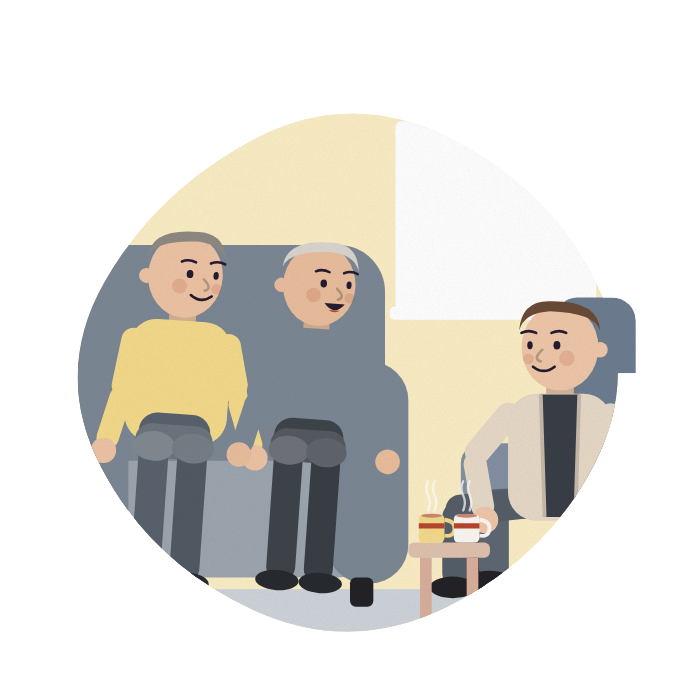
- How it's done. The NHS says assessments are usually face to face and last at least an hour, though some councils do them by phone or online (NHS, Carer's assessments).
- Who does it. Someone from the council, or an organisation the council works with (NHS, Carer's assessments).
- Bring someone. The council must involve anyone you ask it to (Care Act 2014, section 10(7)). It can be a friend, a relative or the person you look after.
- An advocate. If you'd have real difficulty taking part and there's no one suitable to help you, the council must arrange an independent advocate (DHSC and NHS England, Hospital discharge and community support guidance; statutory guidance, chapter 7).
- Say how things really are. Talk about a hard week, not a good day.
7. A letter you can copy
Copy this into an email or letter to the council's adult social services. Change the words in square brackets.
Subject: Request for a carer's assessment
Dear adult social care team,
I'm writing to ask for a carer's assessment under section 10 of the Care Act 2014.
I look after [name], who is my [mum, dad, partner or other] and lives at [address]. I help with [for example, washing, meals, medicines, appointments and being there at night]. Caring is affecting [for example, my sleep, my health, my job].
[Optional: [Name] is also asking for a needs assessment. We'd like the two assessments to be done together.]
Please tell me when the assessment will happen, how it will be done, and roughly how long it will take. Please send me a copy of the assessment afterwards.
The best way to contact me is [phone or email]. The best times are [times].
Thank you,
[Your name]
[Your address]
[Date]
Keep a copy, and write down the date you sent it.

8. The decision: eligible needs
After the assessment, the council decides whether you have eligible needs. This is a national threshold, set out in the Care and Support (Eligibility Criteria) Regulations 2015 (legislation.gov.uk, regulation 3). In plain words, your needs are eligible if all three of these apply:
- Your needs come from giving necessary care to an adult.
- Because of that, your physical or mental health is getting worse or could get worse, or you can't manage at least one of these:
- caring for a child you're responsible for - caring for anyone else you look after - keeping your home in a fit state to live in - eating well and keeping up with meals - keeping up relationships with family and friends - work, training, education or volunteering - using local services and facilities - leisure and hobbies
- As a result, there is, or is likely to be, a significant impact on your wellbeing.
"Can't manage" includes things you can only do with help, things that cause you significant pain, distress or anxiety, and things that put your health or safety, or someone else's, in danger (regulation 3(3)). If your needs go up and down, the council must look at a long enough period to get the true picture (regulation 3(4)).
You can be eligible even if the person you look after isn't (statutory guidance, para 6.118).
9. What happens next
A copy of your assessment. The council must give you a written record, and share it with anyone else you ask it to (statutory guidance, para 6.98).
If you have eligible needs, the council must meet them if you ask it to, and write a support plan with you (Hospital discharge and community support guidance; legislation.gov.uk, Care Act 2014, section 20). You'll have a personal budget, which you can take as a direct payment. See our guide to personal budgets, section 9.
Breaks. If the support you need is a break, the care for the person you look after while you're away is usually arranged in their plan. The council can't charge you for services given to them, even if they came from your assessment (statutory guidance, para 8.55). See our guide to looking after yourself, section 3.
Charges. Councils can charge carers for support, but the statutory guidance says they don't have to, and that charging carers is often a false economy (statutory guidance, para 8.50). Ask the council for its charging policy. The NHS says you might have a financial assessment first (NHS, Carer's assessments).
If you don't have eligible needs, the council should still give you free information and advice about help in your community. Ask if this doesn't happen (NHS, Carer's assessments). Carers' centres can help too. See our guide to looking after yourself, section 4.
10. When things change
Ask for a new assessment or a review of your support plan if things change. For example, if the person you look after needs more care, if you're caring for longer, or if your own health or job changes. If the council knows your circumstances have changed, it must think about whether to offer a new assessment (statutory guidance, para 6.21).
11. If you disagree

If you disagree with the outcome, or with how the assessment was done, you can complain (NHS, Carer's assessments):
- Talk to the council first. Ask for the reasons in writing. Sometimes a review sorts it out.
- Make a formal complaint using the council's complaints procedure. It should be on the council's website, and you should be told about it at the assessment.
- Go to the Local Government and Social Care Ombudsman if you're not happy with how the council deals with your complaint (Local Government and Social Care Ombudsman, Make a complaint). It's free.
The council can also be asked to explain how it applied the eligibility threshold in section 8.
12. Wales, Northern Ireland and Scotland
Wales
Under the Social Services and Well-being (Wales) Act 2014, the council must assess a carer who may need support. This applies whatever the council thinks about how much support you need, and whatever your money or the money of the person you look after (legislation.gov.uk, Social Services and Well-being (Wales) Act 2014, section 24). It covers carers of adults and of disabled children, and young carers too. The assessment must look at whether you're able and willing to carry on caring, and the outcomes you want (section 24(4)).
Wales has its own eligibility rules for carers, which look at things like self-care, relationships, work and leisure, and whether you can meet the need yourself or with help from others (legislation.gov.uk, Care and Support (Eligibility) (Wales) Regulations 2015, regulation 5). The Welsh Government's carers' rights page explains your rights (Welsh Government, Carers' rights, updated 14 Oct 2021). If a complaint isn't sorted out, go to the Public Services Ombudsman for Wales.
Northern Ireland
nidirect says that if you give a regular and significant amount of care, you're entitled to a carer's assessment from your Health and Social Care Trust. There's no set definition of "regular and significant". The assessment can be at your home or the home of the person you look after, and they don't need to be there. If two people in a household both give regular care, you can both have one. Your right to an assessment isn't linked to your income or savings, and you can ask for a re-assessment if things change (nidirect, Assessments for carers). The law is the Carers and Direct Payments Act (Northern Ireland) 2002 (legislation.gov.uk, section 1). If a complaint isn't sorted out, go to the Northern Ireland Public Services Ombudsman.
Scotland
In Scotland it's called an Adult Carer Support Plan, or a Young Carer Statement for young carers. You have the right to one from your council, and it includes an emergency plan for if you're ill. Ask the council's social care department or your local carers' centre (mygov.scot, Get an Adult Carer Support Plan or Young Carer Statement, updated 12 Sep 2025). See our guide to looking after yourself, section 2.
13. How Coming Home can help
Coming Home: Family Care is an iPhone app for families looking after someone. It's coming soon. It helps you organise. It isn't financial, legal or medical advice, and it doesn't replace the council or the person who carries out your assessment.
The care circle brings the family, friends and neighbours who help into one place, with shared notes, tasks and a calendar. It can show who does what, which helps when you explain your week.
The family care diary helps you note what you did and when, which can help you get ready for an assessment or a review.
To hear when Coming Home is ready, join the waitlist: https://www.cominghomecare.app/?ref=guide-carers-assessment
Built by people who know home care.
14. Who to call

- Your council's adult social services (the Health and Social Care Trust in Northern Ireland), to ask for an assessment.
- Carers UK Helpline: 0808 808 7777, for carers in all four nations (Carers UK, Helpline and other support).
- Age UK Advice Line: 0800 678 1602 (Age UK, Advice Line).
- Independent Age Helpline: 0800 319 6789 (Independent Age, Contact the Helpline).
- Contact, for families with disabled children: 0808 808 3555 (NHS, Carer's assessments).
If you're worried about their health, contact their GP or NHS 111. In an emergency call 999.
15. Sources
All read on 4 October 2026 unless another date is given. Dates in brackets are the page's own published, updated or reviewed date.
England: law and guidance
- legislation.gov.uk, Care Act 2014, section 10: https://www.legislation.gov.uk/ukpga/2014/23/section/10
- legislation.gov.uk, Care Act 2014, section 20: https://www.legislation.gov.uk/ukpga/2014/23/section/20
- legislation.gov.uk, Care and Support (Eligibility Criteria) Regulations 2015, regulation 3: https://www.legislation.gov.uk/uksi/2015/313/regulation/3/made
- legislation.gov.uk, Children Act 1989, section 17ZA (young carers' needs assessments): https://www.legislation.gov.uk/ukpga/1989/41/section/17ZA
- legislation.gov.uk, Children Act 1989, section 17ZD (parent carers' needs assessments): https://www.legislation.gov.uk/ukpga/1989/41/section/17ZD
- DHSC, Care and support statutory guidance (updated 22 Jul 2025), paras 6.16, 6.18, 6.19, 6.21, 6.22, 6.29, 6.74, 6.98, 6.118, 8.50, 8.55 and chapter 7: https://www.gov.uk/government/publications/care-act-statutory-guidance/care-and-support-statutory-guidance
- DHSC and NHS England, Hospital discharge and community support guidance (updated 26 Jan 2024): https://www.gov.uk/government/publications/hospital-discharge-and-community-support-guidance/hospital-discharge-and-community-support-guidance
England: NHS and complaints
- NHS, Carer's assessments (reviewed 1 Jul 2022): https://www.nhs.uk/conditions/social-care-and-support-guide/support-and-benefits-for-carers/carer-assessments/
- Local Government and Social Care Ombudsman, Make a complaint: https://www.lgo.org.uk/make-a-complaint
Wales, Northern Ireland and Scotland
- legislation.gov.uk, Social Services and Well-being (Wales) Act 2014, section 24: https://www.legislation.gov.uk/anaw/2014/4/section/24
- legislation.gov.uk, Care and Support (Eligibility) (Wales) Regulations 2015, regulation 5: https://www.legislation.gov.uk/wsi/2015/1578/regulation/5/made
- Welsh Government, Carers' rights (updated 14 Oct 2021): https://www.gov.wales/carers-rights
- Public Services Ombudsman for Wales: https://www.ombudsman.wales/
- nidirect, Assessments for carers: https://www.nidirect.gov.uk/articles/assessments-carers
- legislation.gov.uk, Carers and Direct Payments Act (Northern Ireland) 2002, section 1: https://www.legislation.gov.uk/nia/2002/6/section/1
- Northern Ireland Public Services Ombudsman: https://www.nipso.org.uk/
- mygov.scot, Get an Adult Carer Support Plan or Young Carer Statement (updated 12 Sep 2025): https://www.mygov.scot/help-for-carer/carer-support-plan
Helplines
- Carers UK, Helpline and other support: https://www.carersuk.org/help-and-advice/helpline-and-other-support/
- Age UK, Advice Line: https://www.ageuk.org.uk/services/age-uk-advice-line/
- Independent Age, Contact the Helpline: https://www.independentage.org/get-advice/helpline
16. Changelog
| Version | Date | What changed | Why |
|---|---|---|---|
| 1 | October 2026 | First published | Information read on 4 October 2026 |
The next review is due in April 2027, or straight away if the law or guidance changes. The latest version is always at https://www.cominghomecare.app/guides/carers-assessment