
Coming Home guide

Caring for a parent from a distance: a family guide
How to help a parent who lives far away: a local contact, paperwork from home, assessments, visits, who to tell and a shared family rota.
Version 1. October 2026. Next review: April 2027.
See what else you might be able to get with the Benefits finder.
Coming Home is coming soon to iPhone. Join the waitlist.
Version 1. October 2026. Next review: April 2027. Information read on 4 October 2026. We review this guide every April, and straight away if the law or the official guidance changes in any nation.
Who this guide is for: anyone who helps look after a parent, or another relative or friend, who lives a long way away. It might be an hour's drive, a train journey or a flight. It covers finding a local contact, the paperwork you can sort from home, getting the most from visits, who to tell, and what to do in an emergency. It covers England, Wales, Scotland and Northern Ireland, with the differences in section 9.
How to use it: read section 1 first, then the parts that fit you. Section 10 has a weekly rota and a contacts list to fill in. Every fact has a source and a date, and the full list is in "Sources" at the back.
Guidance, not advice. This guide explains the rules in plain words. It can't take everything into account, and the council or Trust decides. For advice on your situation, contact Carers UK, Citizens Advice, Age UK or Independent Age (section 12).
If you're worried about their health, contact their GP or NHS 111. In an emergency call 999.
1. You're still a carer
If you phone every day, sort out bills, book appointments, arrange care or travel to help, you're a carer, even if you live hundreds of miles away. Many people caring from a distance feel guilty that they can't do more, or that they're not "the real carer". You're doing a real job, and you have a right to support too.
The first steps that help most:
- Talk to your parent about what they want, and what worries them.
- Find a local contact who can call round if needed (section 2).
- Sort the paperwork that lets you help from home (section 3).
- Ask for assessments for your parent and for you (section 4).
- Agree who does what with anyone else who helps (section 7).
2. A local contact and an emergency plan
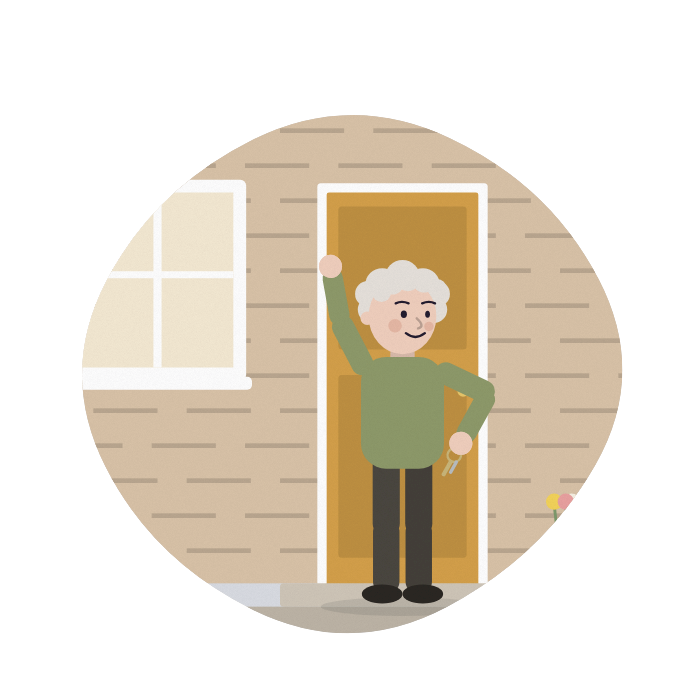
When you live far away, the most useful thing is someone nearby who can step in. It might be a neighbour, a friend, a relative, someone from their place of worship, or a paid carer the family already knows.
Ask them, kindly and specifically:
- Could you call in if we can't get hold of Mum?
- Could you hold a spare key, or know the code to a key safe?
- Could we have your number, and could Mum have it by the phone?
Thank them, keep in touch, and don't lean on one person for everything.
Make an emergency plan. The NHS suggests thinking now about who could step in if the usual carer suddenly couldn't be there, and making sure they have keys, know what care is needed and can find written notes about the person's care and medicines (NHS, Carers' breaks and respite care, reviewed 1 May 2026). Our guide to respite care has a full emergency plan (Coming Home, Respite care).
If your parent suddenly needs care and nobody can be there, contact the council's adult social care team where they live. In England, the council can arrange care for pressing needs before it has finished an assessment (legislation.gov.uk, Care Act 2014, section 19).
3. Paperwork you can sort from home

A lot of caring from a distance is phone calls and forms. These arrangements make it easier, but each one needs your parent's agreement while they can give it.
Power of attorney. A lasting power of attorney (England and Wales) lets someone your parent trusts make decisions for them. There are two kinds: one for property and financial affairs, and one for health and welfare. It has to be registered before it can be used (GOV.UK, Make, register or end a lasting power of attorney, updated 3 Dec 2024). Scotland and Northern Ireland have their own versions. An attorney doesn't have to live nearby. Our power of attorney guide explains each nation (Coming Home, Power of attorney).
Banks. If your parent can make their own decisions, they can give you a "third-party mandate" so you can help run their account. Ask their bank or building society. GOV.UK guidance written with the banks says a mandate isn't suitable if the account holder is losing the ability to make decisions. A registered power of attorney is the usual route then (GOV.UK, Manage a bank account for someone else, updated 2 May 2023).
Benefits. You can help someone with a benefit claim without any special role, if they agree. If they can't manage their own affairs, you can apply to the Department for Work and Pensions to become their appointee. Only one appointee can act for someone with DWP, and the appointee has to report changes and spend the money in their interests (GOV.UK, Become an appointee for someone claiming benefits, updated 14 Mar 2016).
The GP. Ask your parent to tell their GP practice that they're happy for the practice to talk to you. In England, family and carer access in the NHS App lets you book appointments or order repeat prescriptions for someone. But you both need to be registered at the same GP surgery, so it often won't work from a distance (NHS, Using family and carer access, reviewed 23 Sep 2024). Ask the practice what else it can offer, such as calling you after appointments.
Energy. Your parent can join their energy supplier's Priority Services Register if they're over State Pension age or disabled, among other reasons. It can let them name someone, such as a family member, to receive bills and letters from the supplier (Ofgem, Join your supplier's Priority Services Register).
Keep a list of account numbers, passwords your parent chooses to share, and who you've spoken to. Store it safely.
4. Assessments, wherever you live
For your parent. If they need help at home, the council where they live can do a needs assessment. Our guide to arranging care explains it (Coming Home, Arranging care).
For you. In England, a carer's assessment is done by the council where the person you care for lives, not where you live. The statutory guidance says carers' needs are met by the council where the adult with care needs lives (DHSC, Care and support statutory guidance, updated 22 Jul 2025, paras 6.134 and 19.6). The same guidance says an assessment can be done online or by phone, which can help when you're far away (para 6.3).
When you ask, say how far away you live, how often you travel, what you do from home and what would help, such as someone to call in on the days you can't. See our carer's assessment guide (Coming Home, Carer's assessment).

5. Making visits count
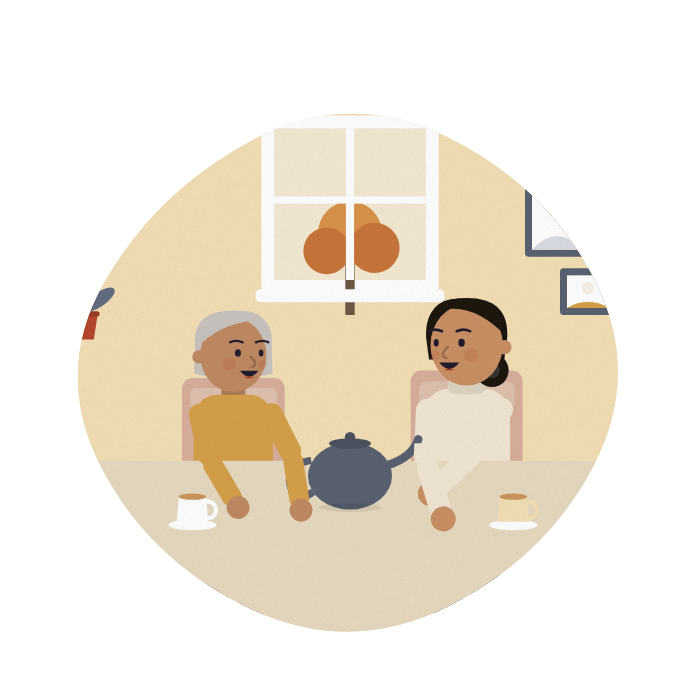
Visits are precious, and they go fast. A little planning helps.
Before you go:
- Phone ahead to book any appointments you'd like to go to, with your parent's agreement.
- Make a short list of jobs: post to sort, things to fix, shopping to stock up on.
- Ask other family members what they'd like you to look at or ask about.
While you're there:
- Spend some of the time just being together, not only doing jobs.
- Notice how things are at home: food in the fridge, post piling up, the heating, how they're getting about. Write it down so you can compare next time.
- Meet the local contact, and any care workers, so they know your face.
After you leave:
- Send a short update to everyone who helps.
- Book the next visit, so everyone has something to look forward to.
Travel costs. Travel can be expensive. Keep receipts. Some employers offer carers' leave or flexible working that helps with longer trips (section 6).
Keeping in touch between visits:
- Agree a regular time to talk, so a missed call stands out and nobody has to wonder.
- Video calls can help you see each other. Keep them simple, and let your parent choose.
- Ask the local contact or care workers to tell you if something changes, and how they'd like you to thank them.
6. Work and caring from a distance
Many people caring from a distance also work. If you're an employee in England, Wales or Scotland, you can take up to one week of unpaid carer's leave every 12 months, and time off in an emergency (GOV.UK, Unpaid carer's leave, updated 9 Apr 2024; GOV.UK, Time off for family and dependants, updated 5 Sep 2016). Our working and caring guide explains your rights, including Northern Ireland (Coming Home, Working and caring).
7. Sharing it with others
If there are brothers, sisters or others who help, agree who does what. The person nearby often does the visits and the person far away often does the phone calls, forms and money. Both jobs matter. Our sharing the caring guide covers family meetings, fairness and money (Coming Home, Sharing the caring).
Use the weekly rota in section 10 to show who's calling, visiting or on call each day.
If the distance no longer works. Over time, you may all start to wonder whether the distance still works. Your parent might think about moving nearer to family, or into housing with more support, or you might think about moving nearer to them. These are big decisions, and they're your parent's to make while they can. Talk early, before a crisis forces a quick choice. A needs assessment, and a carer's assessment for you, can show what help is possible where they live now (section 4). An adviser can explain how a move might affect their benefits, council tax or care costs.

8. Who to tell
With your parent's agreement, let these people know who you are and how to reach you:
If they go into hospital far from you, tell the ward you're the carer and ask to be included in planning their discharge. Our hospital discharge guide explains your rights (Coming Home, Hospital discharge), and our checklist helps you keep track (Coming Home, Hospital discharge checklist).
9. Across the four nations

The ideas in this guide are the same everywhere. The names and the law differ.
- Wales: ask the council where your parent lives for a carer's needs assessment (Welsh Government, Carers' rights, updated 14 Oct 2021). A lasting power of attorney works as in England.
- Scotland: carers can ask for an adult carer support plan (mygov.scot, Get an Adult Carer Support Plan or Young Carer Statement, updated 12 Sep 2025). If you live in a different council area from your parent, ask your parent's council which council will prepare it. Scotland has continuing and welfare powers of attorney (mygov.scot, Setting up power of attorney, updated 25 Feb 2026).
- Northern Ireland: care and carers' assessments are arranged by the Health and Social Care Trust where your parent lives (nidirect, Assessments for carers). Northern Ireland uses an enduring power of attorney (nidirect, Managing your affairs and enduring power of attorney).
- NHS App: the NHS App described in section 3 is for England. In Wales, Scotland and Northern Ireland, ask the GP practice how family members can help online.

10. Your rota and contacts
Fill these in with everyone who helps. This is the same rota as in our sharing the caring guide.
| Day | Morning | Afternoon | Evening | Who's on call |
|---|---|---|---|---|
| Monday | ||||
| Tuesday | ||||
| Wednesday | ||||
| Thursday | ||||
| Friday | ||||
| Saturday | ||||
| Sunday |
| Who | Name | Phone |
|---|---|---|
| Local contact | ||
| Neighbour with a key | ||
| GP practice | ||
| Pharmacy | ||
| Council adult social care (the Trust in NI) | ||
| Home care agency | ||
| Bank or building society | ||
| Energy supplier |
Look after yourself too. Our looking after yourself guide covers breaks, carers' centres and your own health (Coming Home, Looking after yourself).
11. How Coming Home can help

Coming Home: Family Care is an iPhone app for families looking after someone. It's coming soon. It helps you organise. It isn't medical, legal or financial advice.
The care circle brings the family, friends and neighbours who help into one place, with shared notes, tasks and a calendar, so the person far away and the person nearby can see the same plan.
The family care diary keeps visits, calls and notes in one place, so you can see how things have been between visits.
To hear when Coming Home is ready, join the waitlist: https://www.cominghomecare.app/?ref=guide-caring-from-a-distance
Built by people who know home care.
12. Who to call

- The council's adult social care team where your parent lives (England, Wales and Scotland) or their Health and Social Care Trust (Northern Ireland), for assessments and care.
- Carers UK Helpline: 0808 808 7777, for carers in all four nations (Carers UK, Helpline and other support).
- Age UK Advice Line: 0800 678 1602 (Age UK, Advice Line).
- Independent Age Helpline: 0800 319 6789 (Independent Age, Contact the Helpline).
- Citizens Advice: https://www.citizensadvice.org.uk/
If you're worried about their health, contact their GP or NHS 111. In an emergency call 999.
13. Sources
All read on 4 October 2026 unless another date is given. Dates in brackets are the page's own published, updated or reviewed date.
NHS and GOV.UK
- NHS, Carers' breaks and respite care (reviewed 1 May 2026): https://www.nhs.uk/social-care-and-support/support-and-benefits-for-carers/carer-breaks-and-respite-care/
- NHS, Using family and carer access (NHS App help, reviewed 23 Sep 2024): https://www.nhs.uk/nhs-app/help/profile/family-and-carer-access/
- GOV.UK, Make, register or end a lasting power of attorney (updated 3 Dec 2024): https://www.gov.uk/power-of-attorney
- GOV.UK, Manage a bank account for someone else (updated 2 May 2023): https://www.gov.uk/government/publications/deputy-and-attorney-guidance-dealing-with-banks/manage-a-bank-account-for-someone-else-web-version
- GOV.UK, Become an appointee for someone claiming benefits (updated 14 Mar 2016): https://www.gov.uk/become-appointee-for-someone-claiming-benefits
- GOV.UK, Unpaid carer's leave (updated 9 Apr 2024): https://www.gov.uk/carers-leave
- GOV.UK, Time off for family and dependants (updated 5 Sep 2016): https://www.gov.uk/time-off-for-dependants
- Ofgem, Join your supplier's Priority Services Register: https://www.ofgem.gov.uk/your-energy-supply/how-manage-your-energy-supply/join-your-suppliers-priority-services-register
England: law and guidance
- legislation.gov.uk, Care Act 2014, section 19: https://www.legislation.gov.uk/ukpga/2014/23/section/19
- DHSC, Care and support statutory guidance (updated 22 Jul 2025), paras 6.3, 6.134 and 19.6: https://www.gov.uk/government/publications/care-act-statutory-guidance/care-and-support-statutory-guidance
Wales, Scotland and Northern Ireland
- Welsh Government, Carers' rights (updated 14 Oct 2021): https://www.gov.wales/carers-rights
- mygov.scot, Get an Adult Carer Support Plan or Young Carer Statement (updated 12 Sep 2025): https://www.mygov.scot/help-for-carer/carer-support-plan
- mygov.scot, Setting up power of attorney (updated 25 Feb 2026): https://www.mygov.scot/power-of-attorney
- nidirect, Assessments for carers: https://www.nidirect.gov.uk/articles/assessments-carers
- nidirect, Managing your affairs and enduring power of attorney: https://www.nidirect.gov.uk/articles/managing-your-affairs-and-enduring-power-attorney
Helplines
- Carers UK, Helpline and other support: https://www.carersuk.org/help-and-advice/helpline-and-other-support/
- Age UK, Advice Line: https://www.ageuk.org.uk/services/age-uk-advice-line/
- Independent Age, Contact the Helpline: https://www.independentage.org/get-advice/helpline
14. Changelog
| Version | Date | What changed | Why |
|---|---|---|---|
| 1 | October 2026 | First published | Information read on 4 October 2026 |
The next review is due in April 2027, or straight away if the law or guidance changes. The latest version is always at https://www.cominghomecare.app/guides/caring-from-a-distance