
Coming Home guide

Council Tax help for carers and families
Money off Council Tax for live-in carers, dementia, adapted homes, low incomes and care home moves, with a letter to copy. England, Wales, Scotland and NI.
Version 1. October 2026. Next review: April 2027.
See what else you might be able to get with the Benefits finder.
Coming Home is coming soon to iPhone. Join the waitlist.
Version 1. October 2026. Next review: April 2027. Information read on 4 October 2026. We review this guide every April, and straight away if the law or the official guidance changes in any nation.
Who this guide is for: families who look after someone at home, and the person being looked after. Council Tax has several kinds of help that families often miss: money off for a live-in carer, for someone with dementia or another lasting problem with memory and understanding, for a home adapted for a disabled person, and for people on a low income. There's also help when someone moves into a care home, or moves out to look after someone. It covers England in full, with Wales, Scotland and Northern Ireland (which has rates, not Council Tax) in sections 10 to 12.
How to use it: read section 1 for the quick version, then the parts that fit you. Sections 2 to 6 explain each kind of help. Sections 7 to 9 cover applying, a letter you can copy, and what to do if the council says no. Every fact has a source and a date, and the full list is in "Sources" at the back.
Guidance, not advice. This guide explains the rules in plain words. It can't take everything into account, and the council decides. For advice on your situation, contact Citizens Advice, Age UK, Carers UK or Independent Age (section 14).
If you're worried about their health, contact their GP or NHS 111. In an emergency call 999.
1. The quick version
A full Council Tax bill assumes at least 2 adults live in a home. Some people "aren't counted" (the law says "disregarded"), and that can bring the bill down (GOV.UK, How Council Tax works: who has to pay, updated 5 Feb 2025).
| Help | Who it's for | What it can mean |
|---|---|---|
| Carer disregard | A live-in carer giving at least 35 hours of care a week | The carer isn't counted. Often 25% off |
| Mental impairment disregard | Someone with a lasting, serious problem with memory and understanding, with a doctor's certificate and a qualifying benefit | They aren't counted. 25% off, or no bill if they live alone |
| Disabled Band Reduction | A home with an extra room, bathroom, kitchen or wheelchair space a disabled person needs | One band lower, or 17% off in band A |
| Council Tax Reduction | People on a low income or benefits | Up to 100% off |
| Empty home exemptions | A home left empty because the owner or tenant has moved into a care home, or moved to give or receive care | No bill on the empty home |
You usually have to apply for each one, even if you qualify (GOV.UK, How Council Tax works: who has to pay). Several can apply at once.
2. Live-in carers: the carer disregard
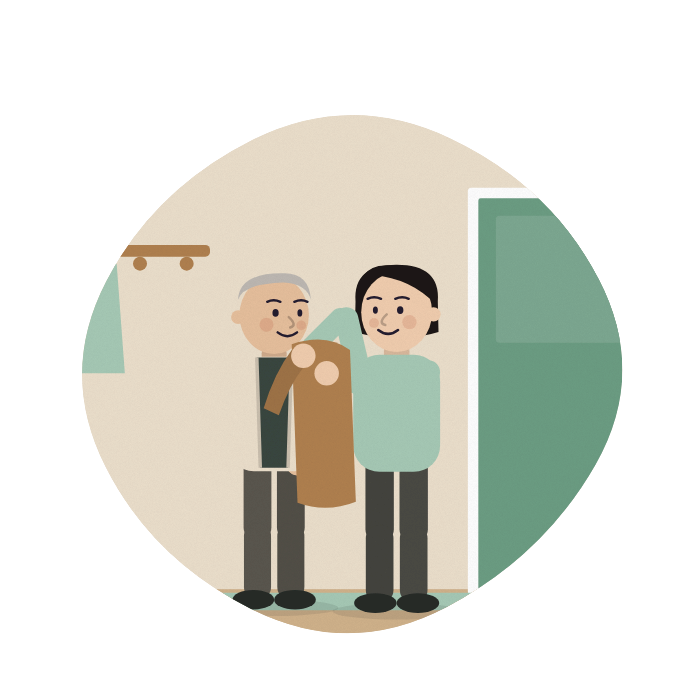
In England and Wales, a carer isn't counted for Council Tax if all of these apply (legislation.gov.uk, Council Tax (Additional Provisions for Discount Disregards) Regulations 1992, Schedule, Part II):
- you live in the same home as the person you care for
- you give them care for at least 35 hours a week, on average
- you're not their spouse or partner, and not the parent of a child under 18 you're caring for
- the person you care for gets a qualifying benefit
The qualifying benefits are (MHCLG, Council tax information letter 2/2026, 18 Feb 2026):
- Attendance Allowance
- the middle or highest rate of the care part of Disability Living Allowance
- the standard or enhanced rate of the daily living part of Personal Independence Payment
- Armed Forces Independence Payment
- certain increases for constant attendance paid with an industrial injuries or war disablement pension
Some council websites are out of date. On 18 February 2026, the government wrote to councils in England because some still show the list of benefits from before 2013. It asked them to bring their websites and bills up to date (MHCLG, Council tax information letter 2/2026). If your council's page doesn't mention Personal Independence Payment, or says only the highest rate of Disability Living Allowance counts, the list above is the current one.
You don't need to get Carer's Allowance, and your income and savings don't count (Welsh Government, Council Tax discounts, disregards, exemptions and reductions, updated 28 Sep 2026).
What it can mean. For example, a daughter who lives with and cares for her dad, who gets Attendance Allowance:
- If her dad pays the bill and she's the only other adult, she isn't counted, so he gets 25% off, the same as living alone.
- If her dad is also not counted, for example because of the mental impairment disregard in section 3, the household can get 50% off (GOV.UK, How Council Tax works: who has to pay).
There's also a separate disregard for some paid carers who live in, are paid very little and were placed by a council or charity (Council Tax (Additional Provisions for Discount Disregards) Regulations 1992, Schedule, Part I). Most family carers come under the 35-hour rule above.
The government has said the carer disregard may be out of date, and has promised to look at changing it ahead of the next spending review (MHCLG, Council tax information letter 3/2026, 15 Apr 2026). Nothing has changed yet.
3. Memory and understanding: the mental impairment disregard
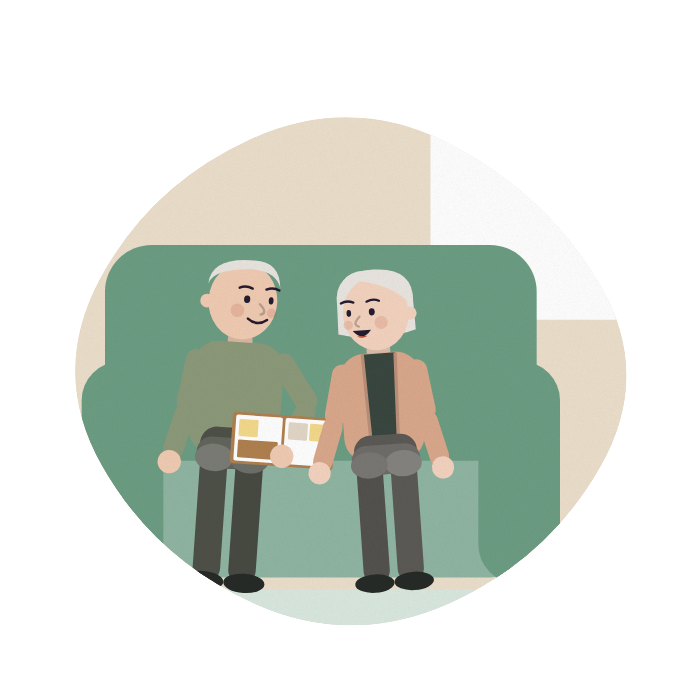
Someone with a lasting, serious problem with memory, understanding and day-to-day functioning, such as advanced dementia, may not be counted for Council Tax. The law's own term for this is "severely mentally impaired", and it defines it as "a severe impairment of intelligence and social functioning (however caused) which appears to be permanent" (legislation.gov.uk, Local Government Finance Act 1992, Schedule 1, paragraph 2). GOV.UK uses the same term (GOV.UK, How Council Tax works: discounts for disabled people, updated 5 Feb 2025).
What they need (GOV.UK, How Council Tax works: discounts for disabled people; Local Government Finance Act 1992, Schedule 1, paragraph 2):
- a certificate from a registered medical practitioner, such as their GP, saying they meet the definition. Councils usually have a form for the doctor to sign.
- a qualifying benefit, such as Attendance Allowance, the middle or highest rate of the care part of Disability Living Allowance, or the daily living part of Personal Independence Payment. Ask the council for its full list (legislation.gov.uk, Council Tax (Discount Disregards) Order 1992, article 3).
What it can mean (GOV.UK, How Council Tax works: discounts for disabled people):
- No bill (100% off) if they live alone, or only with other people who meet the definition. In law this is an exemption for the whole home (legislation.gov.uk, Council Tax (Exempt Dwellings) Order 1992, article 3, Class U).
- 25% off if they live with one other adult who is counted, for example a partner.
- 50% off if everyone else in the home isn't counted either, for example a live-in carer who meets section 2.
Changes coming. In April 2026 the government said it will change the name and definition of this disregard when parliamentary time allows, and work with councils and disability charities on a standard application form (MHCLG, Council tax information letter 3/2026). Until then, the current rules and your council's own form apply.
Backdating. If they qualified before you applied, ask the council to backdate the discount to when they first met the rules, for example when the qualifying benefit started.
4. A home adapted for a disabled person: the Disabled Band Reduction
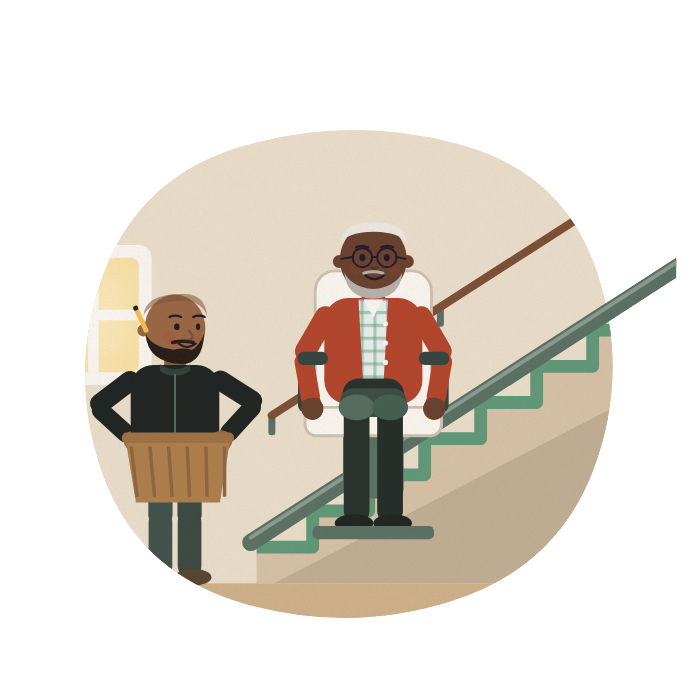
If the home is bigger than it would need to be without the disability, the bill can drop by one band. For example, a band D home pays the band C rate. In band A, the bill goes down by 17% instead (GOV.UK, How Council Tax works: discounts for disabled people).
The home must have one of these, needed by a disabled adult or child who lives there (GOV.UK, How Council Tax works: discounts for disabled people):
- an extra room, other than a bathroom, kitchen or toilet, that's mainly used by the disabled person, for example a ground-floor bedroom for therapy
- a second bathroom or kitchen they need
- enough space inside to use a wheelchair
The law says the room, bathroom, kitchen or space must be essential, or of major importance, to their wellbeing because of their disability (legislation.gov.uk, Council Tax (Reductions for Disabilities) Regulations 1992, regulation 3). The disabled person doesn't have to be the one who pays the bill. See our guide to adapting a home, section 8.
5. Council Tax Reduction for people on a low income
Council Tax Reduction (sometimes called Council Tax Support) can cut the bill by up to 100% for people on a low income or benefits. Homeowners, tenants, people in work and people out of work can all apply. Each council in England runs its own scheme for working-age people, so what you get depends on where you live, your income and savings, and who lives with you (GOV.UK, Apply for Council Tax Reduction).
- Pension Credit often helps with Council Tax Reduction too. See our guide to money and help, section 2.
- Apply to the council that sends the bill. GOV.UK has a postcode finder (GOV.UK, Apply for Council Tax Reduction).
6. Moving into a care home, or moving to give or get care
If the person moves into a care home for good, they're no longer counted at their old home (legislation.gov.uk, Local Government Finance Act 1992, Schedule 1, paragraph 6). What happens next depends on who's left:
- If their old home is now empty, and they owned or rented it, there's usually no Council Tax on it while it stays empty (Council Tax (Exempt Dwellings) Order 1992, article 3, Class E). This is the case even while the home is being sorted out or sold. Tell the council the date they moved.
- If someone still lives there, for example a partner, that person may get 25% off if they now live alone (GOV.UK, How Council Tax works: who has to pay).
- Someone in hospital for a short stay who's coming home still counts. Only someone whose main home is now a hospital isn't counted (Welsh Government, Council Tax discounts, disregards, exemptions and reductions).
If someone moves in with family to be cared for, their own empty home can be exempt, as long as they owned or rented it and it stays empty (Council Tax (Exempt Dwellings) Order 1992, article 3, Class I).
If you move out to care for someone, your own empty home can be exempt, as long as you own or rent it and it stays empty. The care has to be needed because of old age, disability, illness, past or present alcohol or drug dependence, or past or present mental disorder (Council Tax (Exempt Dwellings) Order 1992, article 3, Class J). You'll pay Council Tax where you now live, but you may be able to get the carer disregard there (section 2).
After a death, there's no Council Tax on an empty home until probate is granted. After that, there can be no bill for up to 6 months more while it stays empty and in the name of the person who died (GOV.UK, How Council Tax works: second homes and empty properties). See our end of life guide, section 8.
7. How to apply
Apply to the council that sends the Council Tax bill. GOV.UK links to each council's discount page (GOV.UK, Apply for a Council Tax discount, updated 7 Sep 2022).
Keep paying the bill while you wait. If the council decides the bill is wrong, keep paying the original amounts until the new bill arrives (GOV.UK, Appeal a Council Tax bill or fine).
If your situation changes, for example the person moves out or the benefit ends, tell the council. GOV.UK says that if you get a discount by mistake and don't tell the council, you could get a fine (GOV.UK, How Council Tax works: who has to pay).

8. A letter you can copy
Copy this into an email or letter to the council's Council Tax team. Change the words in square brackets.
Subject: Council Tax account [number]: request for discounts
Dear Council Tax team,
I'm writing about the Council Tax for [address].
[For the carer disregard:] I live at this address and care for [name] for at least 35 hours a week. I'm not their partner, and not the parent of a child I care for. [Name] gets [Attendance Allowance, Personal Independence Payment daily living part, or other qualifying benefit] from [date]. Please disregard me under paragraph 9 of Schedule 1 to the Local Government Finance Act 1992.
[For the mental impairment disregard:] Please send me your form for the mental impairment disregard for [name], so their GP can complete the certificate.
[For the Disabled Band Reduction:] Our home has [an extra room, bathroom or kitchen, or wheelchair space] that [name] needs because of their disability.
Please apply the discounts from [date we first qualified], and send me a new bill. Please let me know if you need any evidence.
Thank you,
[Your name]
[Your address and phone number]
[Date]
Keep a copy, and write down the date you sent it.
9. If the council says no

- Write to the council saying why you think the bill is wrong, for example that you should get a discount. The council has 2 months to reply (GOV.UK, Appeal a Council Tax bill or fine, updated 25 Nov 2014).
- Appeal to the Valuation Tribunal if you disagree with the council's decision, or if it hasn't replied within 2 months. It's independent and free, though you pay your own costs. Appeal within 2 months of the council's decision, or within 4 months of first writing if there's no reply. (GOV.UK, Appeal a Council Tax bill or fine; Valuation Tribunal).
- Complaints about how the council dealt with you go through the council's complaints procedure, then to the Local Government and Social Care Ombudsman (Local Government and Social Care Ombudsman, Make a complaint).
You can't appeal just because you think the bill is too expensive. To challenge the band, contact the Valuation Office instead (GOV.UK, Appeal a Council Tax bill or fine).
10. Wales
The carer disregard, the empty home exemptions and the Disabled Band Reduction work in much the same way in Wales (Welsh Government, Council Tax discounts, disregards, exemptions and reductions):
- Carers: at least 35 hours a week, living with the person, not their partner or their child under 18, with the same list of qualifying benefits. You don't need Carer's Allowance.
- Significant cognitive impairment. Wales calls the mental impairment disregard "significant cognitive impairment". A doctor must certify it, and the person needs a qualifying benefit. The Welsh list also includes Universal Credit with limited capability for work.
- Disabled Band Reduction: the adaptation must be essential or of major importance. A band A home can get a further reduction.
- Council Tax Reduction: Wales has one national scheme, run by each council.
- If the council says no, write to it first, then appeal to the Valuation Tribunal for Wales within the same 2-month and 4-month limits (Valuation Tribunal for Wales, Council Tax billing appeals). Complaints about the council go to the Public Services Ombudsman for Wales.
11. Scotland
Scotland has its own Council Tax rules, but the same kinds of help (mygov.scot, Council Tax discounts, exemptions and reductions, updated 1 Apr 2026):
- A live-in carer for someone who isn't their partner, spouse or child under 18 isn't counted as an adult.
- Significant cognitive difficulties: a discount or exemption, applied for through the council, with a form for the doctor to sign.
- Someone cared for somewhere else, for example in a care home, isn't counted at their old home.
- A home adapted for disability can get a discount.
- Council Tax Reduction is the Scottish Government's national scheme, run by each council. It can cut the bill by up to 100%.
The detailed conditions, including which benefits count, are set by Scottish law and can differ from England's. Ask your council. Complaints about a council go to the Scottish Public Services Ombudsman.
12. Northern Ireland: rates
Northern Ireland has domestic rates instead of Council Tax:
- Disabled Persons Allowance takes 25% off the rates for a home adapted for a disabled person who lives there, for example an extra bathroom, a room used for therapy, or wheelchair space. It isn't affected by income or savings. Apply to Land & Property Services (nidirect, Disabled Persons Allowance).
- Lone Pensioner Allowance takes 20% off for people aged 70 or over who live alone. It can still apply if they live with a carer who isn't their partner, or with someone with dementia or a similar condition (nidirect, Lone Pensioner Allowance).
- Housing Benefit and Rate Relief, or Rate Rebate for people on Universal Credit, helps people on a low income. Claims can be backdated up to three months (nidirect, Apply for Housing Benefit and Rate Relief as a homeowner).
Complaints about a public body go to the Northern Ireland Public Services Ombudsman.
13. How Coming Home can help
Coming Home: Family Care is an iPhone app for families looking after someone. It's coming soon. It helps you organise. It isn't financial, legal or medical advice, and the council decides.
The family care diary helps you note the care you give and when, which helps if the council asks about your hours.
The care circle brings the family, friends and neighbours who help into one place, with shared notes, tasks and a calendar, so everyone knows who's applying for what.
To hear when Coming Home is ready, join the waitlist: https://www.cominghomecare.app/?ref=guide-council-tax
Built by people who know home care.
14. Who to call
- Your council's Council Tax team, to apply (GOV.UK, Apply for a Council Tax discount).
- Citizens Advice: https://www.citizensadvice.org.uk/
- Citizens Advice Scotland: https://www.citizensadvice.org.uk/scotland/
- Citizens Advice Wales: https://www.citizensadvice.org.uk/wales/
- Carers UK Helpline: 0808 808 7777, for carers in all four nations (Carers UK, Helpline and other support).
- Age UK Advice Line: 0800 678 1602 (Age UK, Advice Line).
- Independent Age Helpline: 0800 319 6789 (Independent Age, Contact the Helpline).
- Valuation Tribunal (England): 0303 445 8100 (GOV.UK, Appeal a Council Tax bill or fine).
If you're worried about their health, contact their GP or NHS 111. In an emergency call 999.
15. Sources
All read on 4 October 2026 unless another date is given. Dates in brackets are the page's own published, updated or reviewed date.
England: GOV.UK and MHCLG
- GOV.UK, How Council Tax works: who has to pay (updated 5 Feb 2025): https://www.gov.uk/council-tax/who-has-to-pay
- GOV.UK, How Council Tax works: discounts for disabled people (updated 5 Feb 2025): https://www.gov.uk/council-tax/discounts-for-disabled-people
- GOV.UK, How Council Tax works: second homes and empty properties (updated 5 Feb 2025): https://www.gov.uk/council-tax/second-homes-and-empty-properties
- GOV.UK, Apply for Council Tax Reduction (updated 23 Mar 2017): https://www.gov.uk/council-tax-reduction
- GOV.UK, Apply for a Council Tax discount (updated 7 Sep 2022): https://www.gov.uk/apply-for-council-tax-discount
- GOV.UK, Appeal a Council Tax bill or fine (updated 25 Nov 2014): https://www.gov.uk/council-tax-appeals
- MHCLG, Council tax information letter 2/2026: carers disregard, local council tax support schemes and other matters (18 Feb 2026): https://www.gov.uk/government/publications/council-tax-information-letter-22026-carers-disregard-local-council-tax-support-schemes-and-other-matters/council-tax-information-letter-22026-carers-disregard-local-council-tax-support-schemes-and-other-matters
- MHCLG, Council tax information letter 3/2026: response to council tax administration consultation (15 Apr 2026): https://www.gov.uk/government/publications/council-tax-information-letter-32026-response-to-council-tax-administration-consultation-and-other-issues/council-tax-information-letter-32026-response-to-council-tax-administration-consultation-and-other-issues
England and Wales: the law
- legislation.gov.uk, Local Government Finance Act 1992, Schedule 1, paragraph 2: https://www.legislation.gov.uk/ukpga/1992/14/schedule/1/paragraph/2
- legislation.gov.uk, Local Government Finance Act 1992, Schedule 1, paragraph 6: https://www.legislation.gov.uk/ukpga/1992/14/schedule/1/paragraph/6
- legislation.gov.uk, Council Tax (Additional Provisions for Discount Disregards) Regulations 1992, Schedule: https://www.legislation.gov.uk/uksi/1992/552/schedule
- legislation.gov.uk, Council Tax (Discount Disregards) Order 1992, article 3: https://www.legislation.gov.uk/uksi/1992/548/article/3
- legislation.gov.uk, Council Tax (Exempt Dwellings) Order 1992, article 3 (Classes E, I, J and U): https://www.legislation.gov.uk/uksi/1992/558/article/3
- legislation.gov.uk, Council Tax (Reductions for Disabilities) Regulations 1992, regulation 3: https://www.legislation.gov.uk/uksi/1992/554/regulation/3
Appeals and complaints
- Valuation Tribunal (England): https://valuationtribunal.gov.uk/
- Local Government and Social Care Ombudsman, Make a complaint: https://www.lgo.org.uk/make-a-complaint
- Valuation Tribunal for Wales, Council Tax billing appeals: https://www.valuationtribunal.wales/council-tax-billing.html
- Public Services Ombudsman for Wales: https://www.ombudsman.wales/
- Scottish Public Services Ombudsman: https://www.spso.org.uk/
- Northern Ireland Public Services Ombudsman: https://www.nipso.org.uk/
Wales, Scotland and Northern Ireland
- Welsh Government, Council Tax discounts, disregards, exemptions and reductions (updated 28 Sep 2026): https://www.gov.wales/council-tax-discounts-disregards-exemptions-and-reductions
- mygov.scot, Council Tax discounts, exemptions and reductions (updated 1 Apr 2026): https://www.mygov.scot/council-tax/discounts-exemptions-and-reductions
- nidirect, Disabled Persons Allowance: https://www.nidirect.gov.uk/articles/disabled-persons-allowance
- nidirect, Lone Pensioner Allowance: https://www.nidirect.gov.uk/articles/lone-pensioner-allowance
- nidirect, Apply for Housing Benefit and Rate Relief as a homeowner: https://www.nidirect.gov.uk/articles/apply-housing-benefit-and-rate-relief-homeowner
Helplines
- Carers UK, Helpline and other support: https://www.carersuk.org/help-and-advice/helpline-and-other-support/
- Age UK, Advice Line: https://www.ageuk.org.uk/services/age-uk-advice-line/
- Independent Age, Contact the Helpline: https://www.independentage.org/get-advice/helpline
16. Changelog
| Version | Date | What changed | Why |
|---|---|---|---|
| 1 | October 2026 | First published | Information read on 4 October 2026 |
The next review is due in April 2027, or straight away if the law or guidance changes, including when the mental impairment disregard is renamed. The latest version is always at https://www.cominghomecare.app/guides/council-tax-help-for-carers