Coming Home guide

Personal budgets: council money for care and support
How council personal budgets and direct payments work: assessments, the plan, what the money can buy, carers, reviews and challenging decisions.
Version 1. October 2026. Next review: April 2027.
See what else you might be able to get with the Benefits finder.
Coming Home is coming soon to iPhone. Join the waitlist.
Version 1. October 2026. Next review: April 2027. Information read on 4 October 2026. We review this guide every April, and straight away if the law or the official guidance changes in any nation.
Who this guide is for: you, if the council is going to help with care for someone you love, or if you're a carer and want help for yourself. It might be your mum or dad, your partner, your child, a grandparent or a close friend. It explains personal budgets and direct payments from the council, step by step. It covers England in full, then how Wales, Scotland and Northern Ireland differ.
How to use it: read only the part you need. Sections 1 to 4 cover what a personal budget is, who can have one, the assessments and the plan. Sections 5 to 9 cover how the money can be managed and spent, including technology, and carers' budgets. Sections 10 and 11 cover reviews, asking for more and challenging a decision. Section 12 covers the other nations. Every fact has a source and a date, and the full list is in "Sources" at the back.
Guidance, not advice. This guide explains how personal budgets work, in plain words. It can't tell you what care the person you look after needs, whether they'll be eligible, or how much the council will pay. Only the council (the Health and Social Care Trust in Northern Ireland) can decide that. For advice about your own situation, talk to one of the free advice services in section 14.
If you're worried about their health, contact their GP or NHS 111. In an emergency call 999.
Care the NHS pays for is different. If the person you look after has NHS continuing healthcare, or section 117 aftercare after a stay in hospital under the Mental Health Act, they may have a right to a personal health budget from the NHS instead. See our guide to personal health budgets.
1. What a personal budget is
A personal budget is the amount of money the council says it will cost to meet the care and support needs it has agreed to meet. In England, everyone whose needs the council meets must have one, set out in their care and support plan (DHSC, Care and support statutory guidance, updated 22 Jul 2025, para 11.7). Carers whose needs the council meets have one too, in their support plan (statutory guidance, para 11.7).
The personal budget is the total cost. It's made up of what the council pays and anything the person pays after the financial assessment (statutory guidance, para 11.10). The duty to set a personal budget is in section 26 of the Care Act 2014 (legislation.gov.uk, Care Act 2014, section 26).
A personal budget can be spent in different ways. The council can arrange the care, an organisation can hold the money for you, or the money can be paid to you as a direct payment to arrange care yourself. Section 5 explains each one.
Three ideas run through the rules:
- Enough money. The personal budget "must always be an amount sufficient to meet the person's care and support needs" (statutory guidance, para 11.10).
- No surprises. You should be told an early estimate at the start of planning, and how the final amount was worked out (statutory guidance, paras 11.7 and 11.24).
- Your choice. The person should be able to choose how the budget is managed, and nobody can be made to take a direct payment (statutory guidance, paras 11.3 and 12.9).
2. Who can have one
In England, there are three routes to a personal budget:
- The person needs care and support. After a needs assessment, the council decides which needs are eligible under national rules. If it's going to meet some or all of them, they have a personal budget (statutory guidance, paras 10.9 and 11.7).
- You're a carer. After a carer's assessment, if you have eligible needs as a carer that the council will meet, you have a personal budget of your own (statutory guidance, para 11.7). Section 9 explains carers' budgets.
- Section 117 aftercare. People leaving hospital after being kept there under certain sections of the Mental Health Act have a right to aftercare. The council's part of it can be paid as a direct payment, and aftercare is free (statutory guidance, paras 12.1 and 12.25).
Anyone can ask for a needs assessment, whatever their money (NHS, Getting a needs assessment, see section 3).
To take the money as a direct payment, you must be over 16 (GOV.UK, Apply for direct payments, read 4 Oct 2026).
3. The assessments
The needs assessment
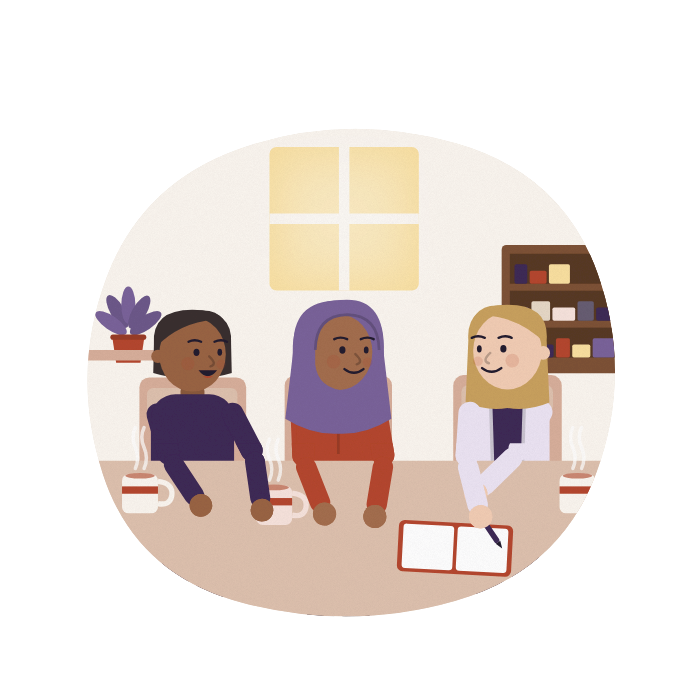
The needs assessment is free and anyone can ask for one. Contact adult social services at the council where the person lives, by phone or online (NHS, Getting a needs assessment, reviewed 22 Aug 2024). Someone such as a social worker or occupational therapist will ask how they manage everyday tasks like washing, dressing and cooking. It can be face to face, by phone or online, and you can have a relative with you or ask for an advocate (NHS, Getting a needs assessment).
The NHS says to give as much detail as you can, even about small tasks, because leaving things out "might reduce the care recommended" (NHS, Getting a needs assessment). Our guide to arranging care, section 2, explains the assessment in all four nations.
The carer's assessment
If you look after someone, you can have a carer's assessment of your own. It's free and anyone over 18 can ask for one. It's separate from the needs assessment, but you can ask for both at the same time (NHS, Carer's assessments, reviewed 1 Jul 2022). It looks at how caring affects you, including your health, work, free time and relationships (NHS, Carer's assessments).
In England the council must assess any carer who appears to need support, whatever it thinks of the level of that need or the carer's money (legislation.gov.uk, Care Act 2014, section 10). See our guide to looking after yourself, section 2.
Getting ready
- Write down what a usual day looks like, the good days and the hard days, and what help family and friends already give.
- Write down what matters to them and to you. For example, staying at home, seeing friends, going to a place of worship, or you keeping your job. These become the outcomes in the plan, and the budget is spent to meet them.
- Ask for a copy of each assessment.
4. The care and support plan

If the council is going to meet needs, it must write a plan with the person. For an adult who needs care, it's the care and support plan. For a carer, it's the support plan (statutory guidance, para 10.8). The person must be "genuinely involved and influential" in writing it (statutory guidance, para 10.2).
The money comes first. The council should share an early estimate of the personal budget at the start of planning, so you can plan with a real figure, and then confirm the final amount in the plan (statutory guidance, para 11.7). It should be clear how the amount was worked out (statutory guidance, para 11.24). Councils shouldn't set fixed ceilings that push people into care homes against their wishes (statutory guidance, para 11.22).
What the plan sets out. The NHS says the plan includes the personal budget and direct payments, and you should get a copy within a few weeks (NHS, Care and support plans, reviewed 30 Jun 2026). The council must also tell the person which of their needs could be met by a direct payment (statutory guidance, para 10.46).
Think wide. The guidance says the plan should cover the person's wishes for their daily and community life, not only personal care (statutory guidance, para 10.38). Care and support can include assistive technology in the home and equipment, not only services like homecare (statutory guidance, para 10.12).
Questions to ask at the planning meeting:
- What's the early estimate of the budget, and how was it worked out?
- Which needs and outcomes will the budget meet?
- Which parts could be a direct payment?
- Can we have a copy of the draft plan before it's signed off?
- When is the first review?
5. Ways to manage the budget
The guidance describes three main ways, plus a mix (statutory guidance, paras 11.30 and 11.31):
- Managed by the council. The council arranges the care in line with the person's wishes. No money changes hands with you. Some people call this a managed budget.
- Held by an organisation for you (an Individual Service Fund). The money goes to an organisation chosen by the person, such as a care provider or a support organisation. It arranges the care you've agreed in the plan.
- A direct payment. The money is paid to the person, or someone acting for them, to arrange care themselves. Section 6 explains it.
- A mix. For example, the council arranges morning visits and a direct payment pays a personal assistant for outings. A mix can also be a gentle way to start with direct payments (statutory guidance, para 11.31).
Whatever you choose, the council must record it in the plan and give as much choice as it reasonably can (statutory guidance, para 11.31).
If the person can't manage it themselves. If they lack mental capacity to ask for a direct payment, someone else, called an authorised person, can ask for and manage it for them, if the council agrees (statutory guidance, para 12.16). A person who can decide for themselves can also ask for the money to be paid to someone they choose, called a nominated person (statutory guidance, para 12.22). Some councils also offer a managed account, where an organisation the council has approved holds the direct payment and pays the bills for you (Luton Council, Adult social care direct payment policy, approved 2 Mar 2026). Ask your council what it offers.
6. Direct payments
How to ask. The council must tell you which needs could be met with a direct payment. You then ask for one. You can ask during planning or at any time after (statutory guidance, paras 12.5 and 12.10). Apply through the council (GOV.UK, Apply for direct payments).
What the council looks at. Section 31 of the Care Act sets four conditions, including that the person can manage the payment, with help if needed, and that a direct payment is a suitable way to meet the needs (legislation.gov.uk, Care Act 2014, section 31; statutory guidance, para 12.14).
If the council says no. It should give written reasons, explain which conditions weren't met and what could change, and tell you how to complain (statutory guidance, paras 12.18 and 12.22).
The agreement and records. Most councils ask for evidence of spending, often every 3 months, and many ask you to sign an agreement. Spending money outside the plan can mean the council takes it back (NHS, Personal budgets and direct payments, reviewed 25 Nov 2022). Keep receipts.
Employing someone. You can use a direct payment to employ a personal assistant. If you do, you may need to arrange references, background vetting, tax, National Insurance, a pension and insurance (NHS, Personal budgets and direct payments). Ask the council what support it offers. Our guide to arranging care, section 4, covers becoming an employer.
Paying a family member. A direct payment can't usually pay a close family member who lives in the same household to give care, unless the council decides it's necessary. A family member in the same household can be paid to help manage the payment, such as doing the paperwork (statutory guidance, para 12.36).
Care home stays. A direct payment can't pay for a long-term care home place. It can pay for short stays of up to 4 weeks in a row in any 12 months, for example to give a carer a break (statutory guidance, para 12.41).
Pre-paid cards. Some councils pay direct payments onto a pre-paid card. The guidance says this shouldn't be the only option, and shouldn't come with blanket limits on what you can buy (statutory guidance, paras 12.58 and 12.59).
Ending a direct payment. The guidance says ending a direct payment should be a last resort (statutory guidance, para 12.67). You can also ask to go back to the council arranging care.
7. What the money can and can't be spent on
It must meet the plan. A personal budget is spent on meeting the needs and outcomes in the care and support plan, or the carer's support plan. If a direct payment is agreed, the guidance says there should be "no unreasonable restriction placed on the use of the payment, as long as it is being used to meet eligible care and support needs" (statutory guidance, para 12.35).
It can be wide. The guidance says people should be able to choose from a wide range of support, and that councils should avoid lists of allowed purchases, because the possibilities are too wide to list (statutory guidance, para 10.48). North Somerset Council, for example, lists (Direct payments guidance, approved 12 Aug 2025):
- help with personal care
- getting out and about in the local community
- activities for physical or mental wellbeing
- equipment or an adaptation to meet needs
- for carers, things like a year's gym membership or a short break away
What it usually can't pay for. Each council has its own policy, so ask for yours. Common limits include:
- anything not agreed in the plan
- long-term care home places (statutory guidance, para 12.41)
- care from a close family member in the same household, unless the council agrees (statutory guidance, para 12.36)
- things the NHS or another public body should provide, such as NHS equipment (Portsmouth City Council, Direct payments policy, 30 Jun 2026)
- household bills and food shopping (Portsmouth City Council, Direct payments policy)
- anything illegal, gambling, alcohol and tobacco (Portsmouth City Council, Direct payments policy)
8. Can a budget pay for things like apps or technology, including Coming Home?
Sometimes, but it's never certain. It depends on the plan, the council's policy and what the council agrees.
What the official guidance says. The Care Act guidance says care and support can include "assistive technology in the home", not only services like homecare (statutory guidance, para 10.12). It says people should be free to choose "'non-service' options such as Information and Communication Technologies (ICT) equipment", and that "Lists of allowable purchases should be avoided" (statutory guidance, para 10.48). For carers, it gives the example of buying "a laptop so they can stay in touch with family and friends" (statutory guidance, para 11.41). Once a direct payment is agreed, there should be no unreasonable restriction on how it's used, as long as it meets eligible needs (statutory guidance, para 12.35).
What that doesn't mean. None of this means a budget will pay for a particular app, device or subscription. Each item is agreed case by case in the plan, and it has to meet a need or outcome in that plan. Councils can also take their own finances into account when deciding how to meet needs (statutory guidance, para 10.27). The council can say no.
What real council policies say. Policies differ, so read your own council's. Three examples, all read on 4 Oct 2026:
- North Somerset Council's direct payments guidance (approved 12 Aug 2025) gives, as one example of a carer's direct payment, "a one-off payment to purchase a tablet" so the carer can keep in touch with family and friends by video (North Somerset Council, Direct payments guidance).
- Portsmouth City Council's direct payments policy (30 Jun 2026) says direct payments "allow people to make more creative choices about how to meet their eligible needs and outcomes agreed in their support plan" (Portsmouth City Council, Direct payments policy).
- Bournemouth, Christchurch and Poole (BCP) Council's direct payments policy (version 1.6, 25 Jun 2026, next review June 2028) says direct payments must not be used for "household bills, e.g. rent, gas, electricity, water, Council Tax" or "day to day household items such as groceries, cleaning products, cigarettes and alcohol" (BCP Council, Adult social care direct payments policy, version 1.6, June 2026).
So some councils allow technology when it clearly meets an outcome in the plan. Others rule out household bills and everyday items that most households buy anyway.
How to ask. If you think an app or a piece of technology would help meet a need in the plan, raise it at the planning meeting or at a review. It helps to:
- Start with the outcome, not the product. Use the plan's own words. For example: "The plan says Mum wants to stay living at home, and that I need support to keep working. A shared calendar and notes the family can all see would help us arrange visits around my shifts."
- Say which need it meets. Point to the line in the plan or the support plan.
- Say what it costs. Include any monthly fee, and how long you'd need it.
- Say what else you've tried. For example, free options or help from family.
- Ask how it would be recorded, and whether it would be a one-off payment or part of the regular budget.
- Ask for the answer in writing. If it's no, ask for the reasons and which part of the policy they rely on.
Ask before you buy. If a direct payment is spent on something that wasn't agreed, the council may ask for the money back (NHS, Personal budgets and direct payments).
For example, a family might ask whether a care organising app such as Coming Home, which we make, could be part of a carer's support plan. That's for the council to decide, using the plan, the outcomes and its own policy. There's no promise it would be agreed.
9. Carers' personal budgets
If your carer's assessment shows you have eligible needs that the council will meet, you have a personal budget in your support plan (statutory guidance, para 11.7).
What it's for. Your budget must be enough to meet your needs so you can keep caring, and it takes account of the outcomes you want in your own life, including work, education, training or time for yourself (statutory guidance, para 11.40). The guidance gives examples of support for a carer's own wellbeing: relaxation classes, a gym or leisure centre membership, adult learning, a hobby, or a laptop to stay in touch with family and friends (statutory guidance, para 11.41).
Taking it as a direct payment. Carers can have their personal budget as a direct payment too (statutory guidance, chapter 12). A carer's direct payment is for your needs as a carer, not for the care of the person you look after.
Breaks. A break from caring may mean care for the person you look after while you're away. Ask the council how it records this, because it's often part of their plan rather than yours. See our guide to looking after yourself, section 3.
10. Reviews, and asking for more
When reviews happen. The council should review the plan at least every 12 months, with a light-touch review 6 to 8 weeks after the plan and budget are agreed (statutory guidance, para 13.32). It must review a direct payment within its first 6 months, then every 12 months (statutory guidance, para 12.24). The NHS says reviews usually happen in the first few months, then once a year (NHS, Care and support plans).
You can ask for a review at any time. The council has a duty to do a review if the person, or someone acting for them, asks. A relative or neighbour can ask too (statutory guidance, paras 13.20 and 13.22). The council should do it unless it's reasonably satisfied the plan still meets their needs (statutory guidance, para 13.23).
Asking for an increase. If needs have changed, or the budget isn't enough to pay for the care in the plan, ask for a review and say why. The budget must be enough to meet the needs (statutory guidance, para 11.10), and you can challenge whether the final amount is enough (statutory guidance, para 11.24). It helps to:
- write down what has changed, with dates
- show where the money runs short, for example the hourly rate of the care in the plan compared with what's on offer locally
- ask what the new budget is based on
- ask for the decision in writing
11. Challenging a decision

If you disagree with an assessment, the plan, the amount, or a refusal of a direct payment:
- Ask the council to look again. Talk to the social worker or their manager, and ask for a review.
- Make a complaint. Councils must have a complaints process for adult social care (statutory guidance, para 11.48). Put it in writing and keep copies.
- Go to the ombudsman. If you're still unhappy after the council's final reply, you can go to the Local Government and Social Care Ombudsman. It's free. You must complain to the council first, and the ombudsman says it may not look at a complaint if more than 12 months have passed since you first knew about the problem (LGSCO, Make a complaint, read 4 Oct 2026).
An advocate can help you through each step. Ask the council, or one of the advice services in section 14.
12. Across the four nations
Wales
Councils can meet care and support needs with direct payments under the Social Services and Well-being (Wales) Act 2014 (legislation.gov.uk, section 50) and the Care and Support (Direct Payments) (Wales) Regulations 2015 (legislation.gov.uk, read 4 Oct 2026). Carers can have direct payments too. Contact the council's social services. If a complaint isn't sorted out, go to the Public Services Ombudsman for Wales.
Scotland
Scotland calls this Self-directed Support, under the Social Care (Self-directed Support) (Scotland) Act 2013 (legislation.gov.uk, section 4). After an assessment of needs, if the person is eligible, they choose one of four options (mygov.scot, Self-directed Support, updated 25 Jun 2026):
- Option 1: a direct payment, to arrange support themselves
- Option 2: an Individual Service Fund, where they choose the support and the council arranges it
- Option 3: the council chooses and arranges the support
- Option 4: a mix of these
Carers can choose from the same four options after a carer's assessment, and you can ask for a review at any time (mygov.scot, Self-directed Support). If a complaint isn't sorted out, go to the Scottish Public Services Ombudsman.
Northern Ireland
The Health and Social Care Trust arranges care, not the council. If the person has been assessed as needing support, you can ask the Trust for direct payments. The Trust decides the amount, and direct payments don't affect other benefits (nidirect, Direct payments, read 4 Oct 2026). Carers aged 16 or over may get direct payments for services the Trust agrees they need (nidirect, Direct payments). If a complaint isn't sorted out, go to the Northern Ireland Public Services Ombudsman.
| England | Wales | Scotland | Northern Ireland | |
|---|---|---|---|---|
| Who decides | The council | The council | The council | The Health and Social Care Trust |
| Main law | Care Act 2014 | Social Services and Well-being (Wales) Act 2014 | Social Care (Self-directed Support) (Scotland) Act 2013 | Direct payments through the Trust |
| What it's called | Personal budget, direct payment | Direct payment | Self-directed Support, four options | Direct payment |
| Carers | Yes, after a carer's assessment | Yes | Yes, after a carer's assessment | Yes, carers aged 16 or over |
| Ombudsman | LGSCO | Public Services Ombudsman for Wales | Scottish Public Services Ombudsman | NI Public Services Ombudsman |
13. How Coming Home can help
Coming Home: Family Care is an iPhone app for families looking after someone. It's coming soon. It helps you organise. It isn't financial, legal or medical advice, and it doesn't replace the council or your social worker.
The care circle brings the family, friends and neighbours who help into one place, with shared notes, tasks and a calendar.
The family care diary helps you note what's changed and when, which can help when you ask for a review.
To hear when Coming Home is ready, join the waitlist: https://www.cominghomecare.app/?ref=guide-personal-budgets
Built by people who know home care.
14. Who to call
This guide is guidance, not advice. For support and advice:
- Your council's adult social care team (social services in Wales, social work in Scotland), or the Health and Social Care Trust in Northern Ireland, for a needs assessment, a carer's assessment, the plan and direct payments
- Carers UK Helpline: 0808 808 7777, Monday to Friday 9am to 6pm (Carers UK, Helpline and other support, read 4 Oct 2026)
- Age UK Advice Line (England): 0800 678 1602, 8am to 7pm, every day of the year (Age UK Advice Line, read 4 Oct 2026)
- Independent Age Helpline: 0800 319 6789, Monday to Friday 8.30am to 5.30pm, closed on bank holidays (Independent Age, Contact the Helpline, read 4 Oct 2026)
- Contact (families with disabled children): 0808 808 3555 (as listed on NHS, Carer's assessments)
- Age Cymru Advice (Wales): 0300 303 44 98, Monday to Friday 9am to 4pm (Age Cymru, Information and advice, read 4 Oct 2026)
- Age Scotland helpline: 0800 12 44 222, Monday to Friday 9am to 1pm (Age Scotland, Helpline, read 4 Oct 2026)
- Age NI Advice: 0808 808 7575, Monday to Friday 9am to 5pm (Age NI, Advice and advocacy, read 4 Oct 2026)
- The ombudsmen, if a complaint isn't sorted out (sections 11 and 12)
If you're worried about their health, contact their GP or NHS 111. In an emergency call 999.
15. Sources
All read on 4 October 2026 unless another date is given. Dates in brackets are the page's own published, updated, approved or reviewed date.
England: law and guidance
- DHSC, Care and support statutory guidance (updated 22 Jul 2025), chapters 10 to 13, paras 10.2, 10.8, 10.9, 10.12, 10.27, 10.38, 10.46, 10.48, 11.3, 11.7, 11.10, 11.22, 11.24, 11.30, 11.31, 11.40, 11.41, 11.48, 12.1, 12.5, 12.9, 12.10, 12.14, 12.16, 12.18, 12.22, 12.24, 12.25, 12.35, 12.36, 12.41, 12.58, 12.59, 12.67, 13.20, 13.22, 13.23, 13.32: https://www.gov.uk/government/publications/care-act-statutory-guidance/care-and-support-statutory-guidance
- legislation.gov.uk, Care Act 2014, section 10: https://www.legislation.gov.uk/ukpga/2014/23/section/10
- legislation.gov.uk, Care Act 2014, section 26: https://www.legislation.gov.uk/ukpga/2014/23/section/26
- legislation.gov.uk, Care Act 2014, section 31: https://www.legislation.gov.uk/ukpga/2014/23/section/31
- legislation.gov.uk, Care and Support (Direct Payments) Regulations 2014: https://www.legislation.gov.uk/uksi/2014/2871/contents/made
England: NHS and GOV.UK
- NHS, Getting a needs assessment (reviewed 22 Aug 2024): https://www.nhs.uk/social-care-and-support/help-from-social-services-and-charities/getting-a-needs-assessment/
- NHS, Carer's assessments (reviewed 1 Jul 2022): https://www.nhs.uk/conditions/social-care-and-support-guide/support-and-benefits-for-carers/carer-assessments/
- NHS, Care and support plans (reviewed 30 Jun 2026): https://www.nhs.uk/social-care-and-support/help-from-social-services-and-charities/care-and-support-plans/
- NHS, Personal budgets and direct payments (reviewed 25 Nov 2022): https://www.nhs.uk/social-care-and-support/money-work-and-benefits/personal-budgets/
- GOV.UK, Apply for direct payments: https://www.gov.uk/apply-direct-payments
- Local Government and Social Care Ombudsman, Make a complaint: https://www.lgo.org.uk/make-a-complaint
Council direct payment policies (examples)
- North Somerset Council, Direct payments guidance (approved 12 Aug 2025), linked from: https://n-somerset.gov.uk/my-services/adult-social-care-support/get-help-support/getting-started-if-you-need-care-support/paying-your-care-support/direct-payments
- Portsmouth City Council, Direct payments policy (30 Jun 2026), linked from: https://www.portsmouth.gov.uk/services/adult-social-care/paying-for-your-social-care/direct-payments
- Bournemouth, Christchurch and Poole Council, Adult social care direct payments policy (version 1.6, 25 Jun 2026, next review June 2028): https://www.bcpcouncil.gov.uk/Assets/About-the-council/Strategies-plans-and-policies/ASC/Direct-Payments-Policy.pdf
- Luton Council, Adult social care direct payment policy (version 4, approved 2 Mar 2026, review April 2028): https://www.luton.gov.uk/sites/default/files/2026-03/Adult%20Social%20Care%20Direct%20Payment%20Policy%20(March%202026).pdf
Wales, Scotland and Northern Ireland
- legislation.gov.uk, Social Services and Well-being (Wales) Act 2014, section 50: https://www.legislation.gov.uk/anaw/2014/4/section/50
- legislation.gov.uk, Care and Support (Direct Payments) (Wales) Regulations 2015: https://www.legislation.gov.uk/wsi/2015/1815/contents/made
- legislation.gov.uk, Social Care (Self-directed Support) (Scotland) Act 2013, section 4: https://www.legislation.gov.uk/asp/2013/1/section/4
- mygov.scot, Self-directed Support (updated 25 Jun 2026): https://www.mygov.scot/self-directed-support
- nidirect, Direct payments: https://www.nidirect.gov.uk/articles/direct-payments-care
Helplines
- Carers UK, Helpline and other support: https://www.carersuk.org/help-and-advice/helpline-and-other-support/
- Age UK Advice Line: https://www.ageuk.org.uk/services/age-uk-advice-line/
- Independent Age, Contact the Helpline: https://www.independentage.org/get-advice/helpline
- Age Cymru, Information and advice: https://www.agecymru.wales/information-advice/
- Age Scotland, Helpline: https://www.agescotland.org.uk/how-we-help/helpline
- Age NI, Advice and advocacy: https://www.ageni.org/services/advice-advocacy/
16. Changelog
| Version | Date | What changed | Why |
|---|---|---|---|
| 1 | October 2026 | First published | Information read on 4 October 2026 |
The next review is due in April 2027, or straight away if the law or guidance changes. The latest version is always at https://www.cominghomecare.app/guides/personal-budgets