
Coming Home guide

Respite care: getting a break from caring
Types of break, how to ask the council, who pays, benefits during a short care home stay and planning for emergencies. England, Wales, Scotland and NI.
Version 1. October 2026. Next review: April 2027.
See what else you might be able to get with the Benefits finder.
Coming Home is coming soon to iPhone. Join the waitlist.
Version 1. October 2026. Next review: April 2027. Information read on 4 October 2026. We review this guide every April, and straight away if the law or the official guidance changes in any nation.
Who this guide is for: anyone who looks after a family member, partner or friend and needs a break, whether that's an afternoon off, a full night's sleep or a week away. It explains the kinds of break there are, how to ask the council for help, who pays, what happens to benefits during a short stay in a care home, and how to plan for an emergency. It covers England in full, with Wales, Scotland and Northern Ireland in sections 10 to 12.
How to use it: read section 1 first, then the parts that fit you. Sections 2 to 5 cover asking for help and paying. Sections 6 to 9 cover emergencies, getting ready for a break, a letter you can copy and what to do if the answer is no. Every fact has a source and a date, and the full list is in "Sources" at the back.
Guidance, not advice. This guide explains the rules in plain words. It can't take everything into account, and the council or Trust decides. For advice on your situation, contact Carers UK, Citizens Advice, Age UK or Independent Age (section 14).
If you're worried about their health, contact their GP or NHS 111. In an emergency call 999.
1. What respite care means
Respite care means taking a break from caring while the person you care for is looked after by someone else. The NHS says it lets you take time out to look after yourself, and helps you keep going without becoming exhausted and run down (NHS, Carers' breaks and respite care, reviewed 1 May 2026).
A break doesn't have to mean going away. The NHS lists these main types (NHS, Carers' breaks and respite care):
| Type of break | What it looks like |
|---|---|
| Day centre | The person you care for spends the day out, with company and activities. Transport is often available, sometimes for a charge |
| A paid carer at home | A care worker comes in, for a few hours a week or for a week while you're away. Live-in care is possible if they need someone there all the time |
| A short stay in a care home | They stay in a care home for a few nights or weeks. Some homes take bookings ahead, which helps you plan a holiday |
| Family and friends | Someone moves in for a while, or the person you care for goes to stay with them |
| Respite holidays | Breaks designed for carers and the people they look after, sometimes with grants for families on a low income |
| Sitting services | A trained volunteer keeps them company for a few hours. Often free, or there may be a small charge |
We don't name any care homes, agencies or holiday companies, on purpose. The council or your local carers' centre can tell you what's near you (NHS, Carers' breaks and respite care).

2. How to ask: the two assessments

In England, the council will only pay for respite care for people it has assessed as needing it. So if you want help from the council, it's important that both of you have an assessment (NHS, Carers' breaks and respite care):
- A carer's assessment for you. The council must assess any carer who appears to need support, and it must look at whether you're able and willing to keep caring, and what you want to do outside caring (legislation.gov.uk, Care Act 2014, section 10). See our guide to carer's assessments, section 3.
- A needs assessment for the person you care for. Even if they don't want the council to pay, the NHS says it's useful because it will say which type of respite care suits them best (NHS, Carers' breaks and respite care). See our guide to arranging care, section 2.
At the assessment, say plainly that you need breaks. Say how often, how long, and what would work for the person you care for. If you have eligible needs, the council must meet them, and a break is one way it can do that (legislation.gov.uk, Care Act 2014, section 20).
3. Who pays in England
If the council agrees to help, it does a financial assessment to work out whether it will pay towards the break. You can ask the council to arrange it, or take a direct payment and arrange it yourselves (NHS, Carers' breaks and respite care). See our guide to personal budgets, section 6.
You can't be charged for care given to the person you look after. A council has the power to charge a carer for services it gives directly to the carer. But it must not charge a carer for care and support provided directly to the person they care for, under any circumstances (DHSC, Care and support statutory guidance, updated 22 Jul 2025, para 8.49). The guidance also says charging carers is often a false economy (paras 8.50 and 8.51). Any charge for the break itself is usually assessed against the money of the person being cared for.
Short stays in a care home (Care and support statutory guidance, para 8.34 and annex F):
- A short-term resident is someone staying in a care home for up to 8 weeks, for example for respite. The council can choose to charge them as if they were getting care at home.
- A temporary resident is someone whose stay is expected to last no more than 52 weeks, with a plan to go home. Their home isn't counted in the financial assessment while they plan to go back to it.
- The council can choose not to charge at all.
Direct payments can pay for a short stay in a care home, as long as the stay isn't more than 4 weeks in a row in any 12 months. Two stays less than 4 weeks apart are added together. The council can still arrange and pay for longer stays itself (Care and support statutory guidance, paras 12.41 to 12.44).
For how the means test works, see our guide to arranging care, section 7.

4. Benefits during a short stay in a care home

A short stay can affect benefits, for both of you. Tell the right office about any stay, even a short one.
Attendance Allowance and Disability Living Allowance end after 4 weeks if the council is paying for the care home. The guidance tells councils to think about the effect on the person's ability to keep their home going (Care and support statutory guidance, annex F, para 14). If they pay all the care home costs themselves, they can usually keep Attendance Allowance (GOV.UK, Attendance Allowance: eligibility, updated 21 Oct 2024).
Pension Credit or Income Support usually stays the same during a temporary stay. But a severe disability premium can end if Attendance Allowance or Disability Living Allowance ends (Care and support statutory guidance, annex F, para 15).
Personal Independence Payment: the person must report going into a care home, and tell the office if a temporary stay becomes permanent or the way the fees are paid changes (GOV.UK, PIP: report a change of circumstances, updated 6 Nov 2024).
Your Carer's Allowance. You can still get Carer's Allowance if you temporarily stop caring, as long as the person you care for still gets their disability benefit. You must tell the Department for Work and Pensions if they'll be in hospital, a nursing home or respite care for more than 12 weeks, or if you stop caring for more than 28 days for any other reason (GOV.UK, Carer's Allowance: report a change in circumstances, updated 17 Oct 2024). There are limits on how long breaks can last. See our Carer's Allowance guide, section 10.
5. Paying for it yourselves, and help from charities
If the person you care for pays for their own respite, the NHS says they might use income from pensions, work or savings, or benefits such as Attendance Allowance (NHS, Carers' breaks and respite care).
Some charities give grants towards a break. The NHS points to Carers Trust and to the Turn2us grants search, and to Family Fund for families on a low income caring for a disabled or seriously ill child (NHS, Carers' breaks and respite care). Your local carers' centre may know of local funds too.
6. A plan for emergencies
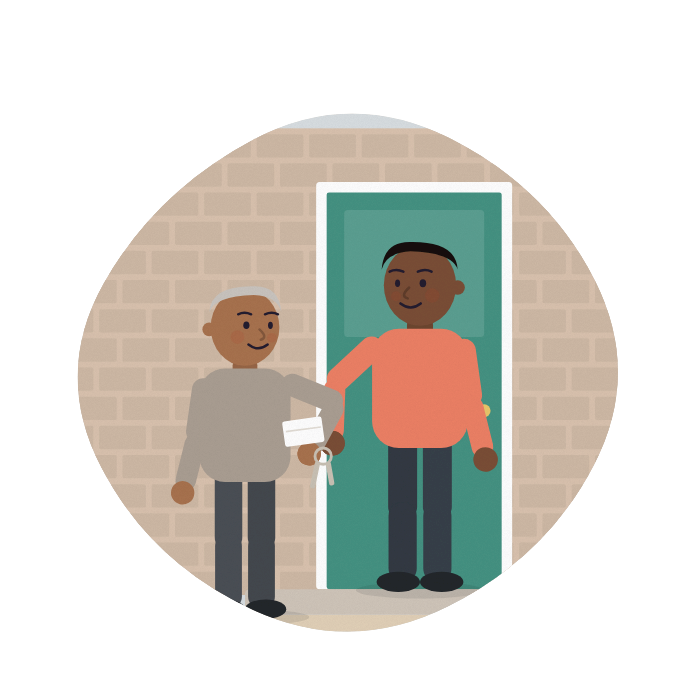
The NHS suggests thinking now about who could step in if you suddenly couldn't be there, for example after an accident or a sudden illness. It might be a relative, friend or neighbour who could help for a few hours while other care is arranged (NHS, Carers' breaks and respite care). Make sure they:
Leave the notes somewhere easy to find. Your carer's assessment can include planning for an emergency, so ask about it.
If you suddenly can't be there and the person needs care straight away, contact the council's adult social care team. The council can arrange care for pressing needs before it has finished an assessment (legislation.gov.uk, Care Act 2014, section 19).
7. Getting ready for a short stay
A short list to help the stay go well, whether at home with a care worker or in a care home.
Write down any questions you want to ask the care home or agency before the stay, such as what a usual day looks like and how they'll keep you updated.
8. A letter you can copy
Use this to ask the council for a carer's assessment that looks at breaks. Change the words in square brackets.
Subject: Request for a carer's assessment, including breaks from caring
Dear Adult Social Care team,
I care for [name], my [relationship], at [address]. I'd like a carer's assessment under section 10 of the Care Act 2014.
I care for [name] for about [number] hours a week. I'm finding it hard to keep going without a break, and I'd like the assessment to look at regular breaks, for example [an afternoon a week, a night's sleep, a week away each year].
I'd also like a needs assessment for [name], so we can look at what kind of break would suit them.
Please let me know when you can see us, and whether you need anything from me first.
Thank you,
[Your name]
[Your phone number and email]
[Date]
Keep a copy, and write down the date you sent it.
9. If the council says no

- Ask for the decision in writing, with the reasons. If you have eligible needs, the council must meet them (Care Act 2014, section 20).
- Ask for a review if things change, for example if caring is getting harder.
- Make a complaint through the council's complaints procedure. If you're still unhappy, you can go to the Local Government and Social Care Ombudsman (Local Government and Social Care Ombudsman, Make a complaint).
Carers UK, Citizens Advice and Age UK can help you put your case (section 14).
10. Wales
- Ask for a carer's assessment. The council must offer one to any carer who appears to need support (legislation.gov.uk, Social Services and Well-being (Wales) Act 2014, section 24). Ask about breaks at the assessment (Welsh Government, Carers' rights, updated 14 Oct 2021).
- No charge to you for care given to the person you look after. A council must not charge an adult carer for care and support provided directly to the person they care for (Welsh Government, Part 4 and 5 code of practice: charging and financial assessment, December 2025, paras 12.1 and 12.2).
- Short stays in a care home. For a stay of up to 8 weeks, such as respite, a council that charges must assess the person as if they were getting care at home (Part 4 and 5 code of practice, para 9.3). Care at home has a weekly maximum charge of £100 (Welsh Government, Charging for social care).
- Complaints go to the council, then the Public Services Ombudsman for Wales.
11. Scotland
- Breaks are part of your Adult Carer Support Plan. When the council decides what support to give you, it must think about whether it should include a break from caring. Breaks can be regular or now and then, of different lengths (legislation.gov.uk, Carers (Scotland) Act 2016, section 25). See our guide to the Adult Carer Support Plan, section 8.
- Each council publishes a short breaks services statement setting out what's available (Scottish Government, Carers' charter).
- No charge for your support. The council must not charge you for support it gives you under the Carers Act (legislation.gov.uk, Carers (Waiving of Charges for Support) (Scotland) Regulations 2014, regulation 2). Care for the person you look after during a break can come under their own care arrangements, so ask the council how it works where you live.
- A right to breaks is coming, but isn't in force yet. The Care Reform (Scotland) Act 2025 adds it to the Carers Act. On 4 October 2026 it hadn't started (legislation.gov.uk, Care Reform (Scotland) Act 2025, section 8; Scottish Government, Unpaid carers: right to breaks and timescales for support plans, consultation, 27 Feb 2026).
- Carer Support Payment can carry on during short breaks. See our Carer Support Payment guide, section 9.
- Complaints go to the council, then the Scottish Public Services Ombudsman.
12. Northern Ireland
- Ask the Health and Social Care Trust for a carer's assessment (nidirect, Assessments for carers).
- Trusts can arrange day or night sitting, a short stay in a care home, time in a day centre, or outings for the person you care for. A short break doesn't have to mean going away, and Trusts may work with charities that specialise in short breaks (nidirect, Looking after yourself as a carer).
- Temporary stays in a care home. The person contributes to the cost. For the first 8 weeks the Trust may decide a fair contribution without a full financial assessment. Their home isn't counted as capital during a temporary stay. Direct payments can pay for occasional short stays, usually up to 4 weeks, if the Trust agrees (nidirect, Paying your care home fees).
- Complaints go to the Trust, then the Northern Ireland Public Services Ombudsman.
13. How Coming Home can help
Coming Home: Family Care is an iPhone app for families looking after someone. It's coming soon. It helps you organise. It isn't medical, legal or financial advice.
The care circle brings the family, friends and neighbours who help into one place, with shared notes, tasks and a calendar, so the person stepping in knows the routine.
The family care diary helps you keep the notes someone would need if they took over for a day or a week.
To hear when Coming Home is ready, join the waitlist: https://www.cominghomecare.app/?ref=guide-respite-care
Built by people who know home care.
14. Who to call

- Your council's adult social care team (England, Wales and Scotland) or your Health and Social Care Trust (Northern Ireland), for assessments and breaks.
- Carers UK Helpline: 0808 808 7777, for carers in all four nations (Carers UK, Helpline and other support).
- Age UK Advice Line: 0800 678 1602 (Age UK, Advice Line).
- Independent Age Helpline: 0800 319 6789 (Independent Age, Contact the Helpline).
- Citizens Advice: https://www.citizensadvice.org.uk/
If you're worried about their health, contact their GP or NHS 111. In an emergency call 999.
15. Sources
All read on 4 October 2026 unless another date is given. Dates in brackets are the page's own published, updated or reviewed date.
England: NHS and GOV.UK
- NHS, Carers' breaks and respite care (reviewed 1 May 2026): https://www.nhs.uk/social-care-and-support/support-and-benefits-for-carers/carer-breaks-and-respite-care/
- GOV.UK, Attendance Allowance: eligibility (updated 21 Oct 2024): https://www.gov.uk/attendance-allowance/eligibility
- GOV.UK, PIP: report a change of circumstances (updated 6 Nov 2024): https://www.gov.uk/pip/change-of-circumstances
- GOV.UK, Carer's Allowance: report a change in circumstances (updated 17 Oct 2024): https://www.gov.uk/carers-allowance/further-information
England: law and guidance
- legislation.gov.uk, Care Act 2014, section 10: https://www.legislation.gov.uk/ukpga/2014/23/section/10
- legislation.gov.uk, Care Act 2014, section 19: https://www.legislation.gov.uk/ukpga/2014/23/section/19
- legislation.gov.uk, Care Act 2014, section 20: https://www.legislation.gov.uk/ukpga/2014/23/section/20
- DHSC, Care and support statutory guidance (updated 22 Jul 2025), paras 8.34, 8.49 to 8.51, 12.41 to 12.44 and annex F: https://www.gov.uk/government/publications/care-act-statutory-guidance/care-and-support-statutory-guidance
- Local Government and Social Care Ombudsman, Make a complaint: https://www.lgo.org.uk/make-a-complaint
Wales
- legislation.gov.uk, Social Services and Well-being (Wales) Act 2014, section 24: https://www.legislation.gov.uk/anaw/2014/4/section/24
- Welsh Government, Carers' rights (updated 14 Oct 2021): https://www.gov.wales/carers-rights
- Welsh Government, Part 4 and 5 code of practice: charging and financial assessment (December 2025), paras 9.3, 12.1 and 12.2: https://www.gov.wales/sites/default/files/publications/2025-12/social-services-and-well-being-act-wales-2014-part-4-and-5-code-of-practice-charging-and-financial-assessment-2025.pdf
- Welsh Government, Charging for social care: https://www.gov.wales/charging-social-care
- Public Services Ombudsman for Wales: https://www.ombudsman.wales/
Scotland
- legislation.gov.uk, Carers (Scotland) Act 2016, section 25: https://www.legislation.gov.uk/asp/2016/9/section/25
- legislation.gov.uk, Carers (Waiving of Charges for Support) (Scotland) Regulations 2014, regulation 2: https://www.legislation.gov.uk/ssi/2014/65/regulation/2
- legislation.gov.uk, Care Reform (Scotland) Act 2025, section 8: https://www.legislation.gov.uk/asp/2025/9/section/8
- Scottish Government, Carers' charter: https://www.gov.scot/publications/carers-charter/pages/2/
- Scottish Government, Unpaid carers: right to breaks and timescales for support plans, consultation (27 Feb 2026): https://www.gov.scot/publications/right-breaks-timescales-support-plans-unpaid-carers/
- Scottish Public Services Ombudsman: https://www.spso.org.uk/
Northern Ireland
- nidirect, Assessments for carers: https://www.nidirect.gov.uk/articles/assessments-carers
- nidirect, Looking after yourself as a carer: https://www.nidirect.gov.uk/articles/looking-after-yourself-carer
- nidirect, Paying your care home fees: https://www.nidirect.gov.uk/articles/paying-your-care-home-fees
- Northern Ireland Public Services Ombudsman: https://www.nipso.org.uk/
Helplines
- Carers UK, Helpline and other support: https://www.carersuk.org/help-and-advice/helpline-and-other-support/
- Age UK, Advice Line: https://www.ageuk.org.uk/services/age-uk-advice-line/
- Independent Age, Contact the Helpline: https://www.independentage.org/get-advice/helpline
16. Changelog
| Version | Date | What changed | Why |
|---|---|---|---|
| 1 | October 2026 | First published | Information read on 4 October 2026 |
The next review is due in April 2027, or straight away if the law or guidance changes, including when the right to breaks starts in Scotland. The latest version is always at https://www.cominghomecare.app/guides/respite-care